The Filing Agent Has the CIK but Cannot Submit: Read the EDGAR Next Access Receipt
Separate EDGAR Next enrollment, account-administrator authority, delegation and API tokens when a filing agent has a CIK but no valid submission path.
Signals to watch
- A filing deadline is approaching and the agent knows the filer CIK but cannot see an authorised submission role under EDGAR Next
- The filer enrolled but the named account administrator cannot approve a user, entity delegation or annual confirmation
- Browser filing works for an authorised user while an automated submission fails because the filer-token, user-token or technical-administrator route is incomplete
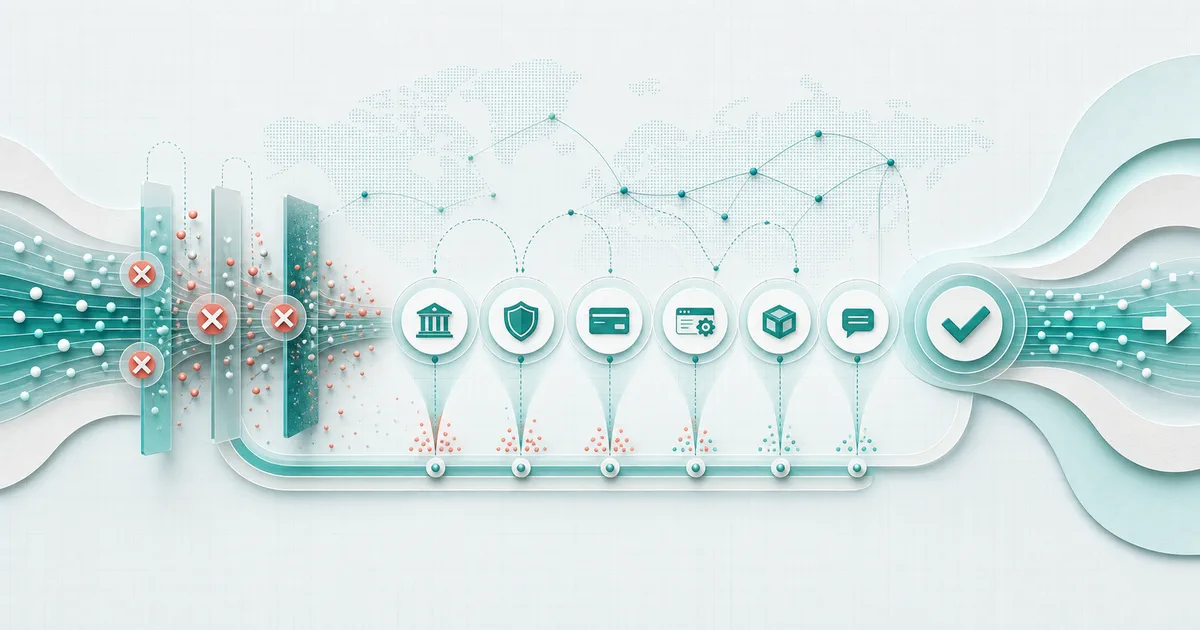
A Central Index Key (CIK) identifies an EDGAR filer; it does not authorise a person or filing agent to submit. When an agent says “we have the CIK but access fails,” read five separate records: EDGAR Next enrollment, account-administrator control, user or entity delegation, annual confirmation and the chosen web or application programming interface (API) channel. The missing record identifies the repair.
This is a long-tail, transactional Signal for an SEC filing-support provider’s business-development lead monitoring authorised issuer, securities-counsel and filing-agent Telegram groups. It becomes timely when a named filer, form and filing date appear beside an access failure. Seeing it one day late can mean missing the credential-recovery or agent-delegation work before the filing window. It never justifies asking anyone to post EDGAR credentials in a group.
TOP Prospect can preserve source and time, remove obvious duplicates and rank that named-filer access problem from Telegram groups the user deliberately connects and may access. It cannot open EDGAR accounts, view private dashboards, reset credentials, approve delegations, handle tokens, contact participants or submit a filing. Pricing and access options describe discovery, not filing authority.
EDGAR Next changed authority, not the meaning of a CIK
The Securities and Exchange Commission adopted EDGAR Filer Access and Account Management on 27 September 2024. The system commonly called EDGAR Next replaced shared legacy access practices with individual credentials, role-based account management, entity delegation, annual confirmation and token controls for API submissions. The SEC’s EDGAR Next resource hub says compliance began on 15 September 2025.
By August 2026, “we used the old passphrase last year” is not a transition plan. The CIK still identifies the filer in public records and submissions. Authority now comes from the enrolled account and its current roles.
The final rule generally requires each filer to authorise and maintain at least two account administrators. An individual filer or single-member company may maintain one. Account administrators manage the people and entities authorised to act for the filer, assign relevant roles and complete the filer’s annual confirmation. A filing agent can be delegated authority, but a historical client relationship is not a current delegation.
Read one access receipt from left to right
Use a five-part receipt rather than an email chain full of screenshots.
1. Filer identity. Record the exact legal name and CIK. Match them to the intended form and public EDGAR record. A typo in the CIK can send every later access check to the wrong account.
2. Enrollment state. Record whether the filer is enrolled in EDGAR Next and when. If enrollment is incomplete, delegation and tokens cannot repair the missing account foundation. If it is complete, do not ask for legacy credentials as a shortcut.
3. Account administrator. Name the current account administrator who can inspect the dashboard and the second administrator where required. Record whether the annual confirmation is current. A former employee listed in an internal spreadsheet is not proof that the SEC account still has an active administrator.
4. Acting party. Identify the individual user or delegated filing entity that will submit. If a filing agent is involved, record the delegation’s direction and status: the filer delegates, and the agent accepts and assigns authorised people under its own account structure. Do not collapse the filer, agent company and individual operator into one “login.”
5. Submission channel. Mark web filing or API. API means application programming interface, a machine-to-machine submission route. It adds user and filer API-token evidence and technical-administrator work. A successful browser login does not prove that an automated job has valid tokens; a token does not fix missing filer authority.
The five fields form the article’s original contribution: one receipt tying CIK, administrator, delegated party and channel together. Each field has a different owner and a different completion event.
Example: “CIK works” but the deadline is Tuesday
Consider this illustrative composite, not an issuer or client message:
“Need to file Tuesday. Agent has the CIK and filed last quarter, but the new dashboard shows no company. The person who handled codes left. Can someone reset it?”
The message provides a Tuesday event, an agent, a CIK, a previous filing and a departed employee. It does not identify the filer, form, EDGAR Next enrollment, account administrators, agent delegation, annual-confirmation state, web or API channel, or whether Tuesday is the actual SEC deadline.
Do not reply with credential-reset instructions in public. Build the receipt with open fields:
Filer and CIK: to be matched; enrollment: unverified; current administrator: unverified after staff departure; agent delegation: not visible; annual confirmation: unknown; channel: unknown; filing form and due date: to be confirmed by authorised counsel.
That receipt separates three likely service routes. If the filer never completed enrollment, use the SEC’s enrollment guidance and authorised support channel. If enrollment exists but control remained with a departed person, recover administrator access through the applicable SEC process. If the filer and administrators are sound but the agent is absent, repair the delegation. Only after those records pass should an automation team investigate API tokens.
Do not let the API route hide an authority problem
The SEC EDGAR Next FAQs distinguish account roles and machine-submission credentials. For an API route, capture the technical administrator, authorised user, filer token, user token, token validity and the software that uses them. Store secrets only in the organisation’s approved secret system; the sales receipt records status and owner, not token values.
A useful test sequence is therefore: can the administrator see the correct filer; can the intended person or delegated entity see valid authority; is annual confirmation current; can an authorised web submission reach the expected form; and, only for API work, are the technical role and both token types valid for the same filer and user?
If the adjacent issue is recovering the controlling SEC source and filing clock, use the SEC cyber-incident source-recovery ledger. If an old screenshot or forwarded instruction has lost its SEC source, use the official-source ladder before acting.
Key facts
- The SEC adopted the EDGAR Next final rule on 27 September 2024.
- The SEC resource hub says compliance began on 15 September 2025.
- A CIK identifies a filer; it does not by itself confer submission authority.
- Filers generally need at least two account administrators; an individual filer or single-member company may use one.
- EDGAR Next supports filer delegation and requires annual confirmation of authorised people and entities.
- API submissions add technical administration plus user and filer tokens; their status is separate from enrollment and delegation.
FAQ
Is knowing the filer CIK enough to submit through EDGAR Next?
No. The CIK identifies the filer; it does not grant authority. The filer must be enrolled and the individual or delegated entity must have the required EDGAR Next authorisation for the chosen submission channel.
How many account administrators does a filer need?
The SEC final rule generally requires at least two. An individual filer or single-member company may have one. Verify the filer type and current dashboard record rather than relying on an old contact list.
Can a filing agent submit merely because it filed for the company before?
No. Prior work does not prove a current EDGAR Next delegation. An account administrator must establish the applicable delegation or user authority, and the receipt should show the filer, delegated party and status.
Do API submissions use the same evidence as browser filing?
They share filer authorisation but add machine-submission credentials. SEC materials describe user and filer API tokens and technical-administrator responsibilities; check token status separately from enrollment and delegation.
The receipt is complete only when the same row shows the correct CIK, an active administrator, an authorised actor and a working channel. “The agent filed last quarter” is history, not access evidence.
Frequently asked questions
Is knowing the filer CIK enough to submit through EDGAR Next?
No. The CIK identifies the filer; it does not grant authority. The filer must be enrolled and the individual or delegated entity must have the required EDGAR Next authorisation for the chosen submission channel.
How many account administrators does a filer need?
The SEC final rule generally requires at least two account administrators. An individual filer or single-member company may have one. Verify the filer type and current dashboard record rather than relying on an old contact list.
Can a filing agent submit merely because it filed for the company before?
No. Prior work does not prove a current EDGAR Next delegation. An account administrator must establish the applicable delegation or user authority and the receipt should show the filer, delegated party and status.
Do API submissions use the same evidence as browser filing?
They share filer authorisation but add machine-submission credentials. The SEC EDGAR Next materials describe user and filer API tokens and technical-administrator responsibilities; token status must be checked separately from enrollment and delegation.
Sources and further reading
- SEC, EDGAR Next—Improving Filer Access and Account Management, current resource hub, accessed 14 August 2026
- SEC Release Nos. 33-11313 and 34-101206, EDGAR Filer Access and Account Management, 27 September 2024
- SEC, Prepare to Enroll in EDGAR Next, accessed 14 August 2026
- SEC, EDGAR Next frequently asked questions, accessed 14 August 2026
How a Signal worth attention is found
See how Top Prospect finds and organizes Signals worth checking, keeps the original Telegram context, removes duplicates, and helps you decide what to review first. You decide whether to follow up and what to do next.