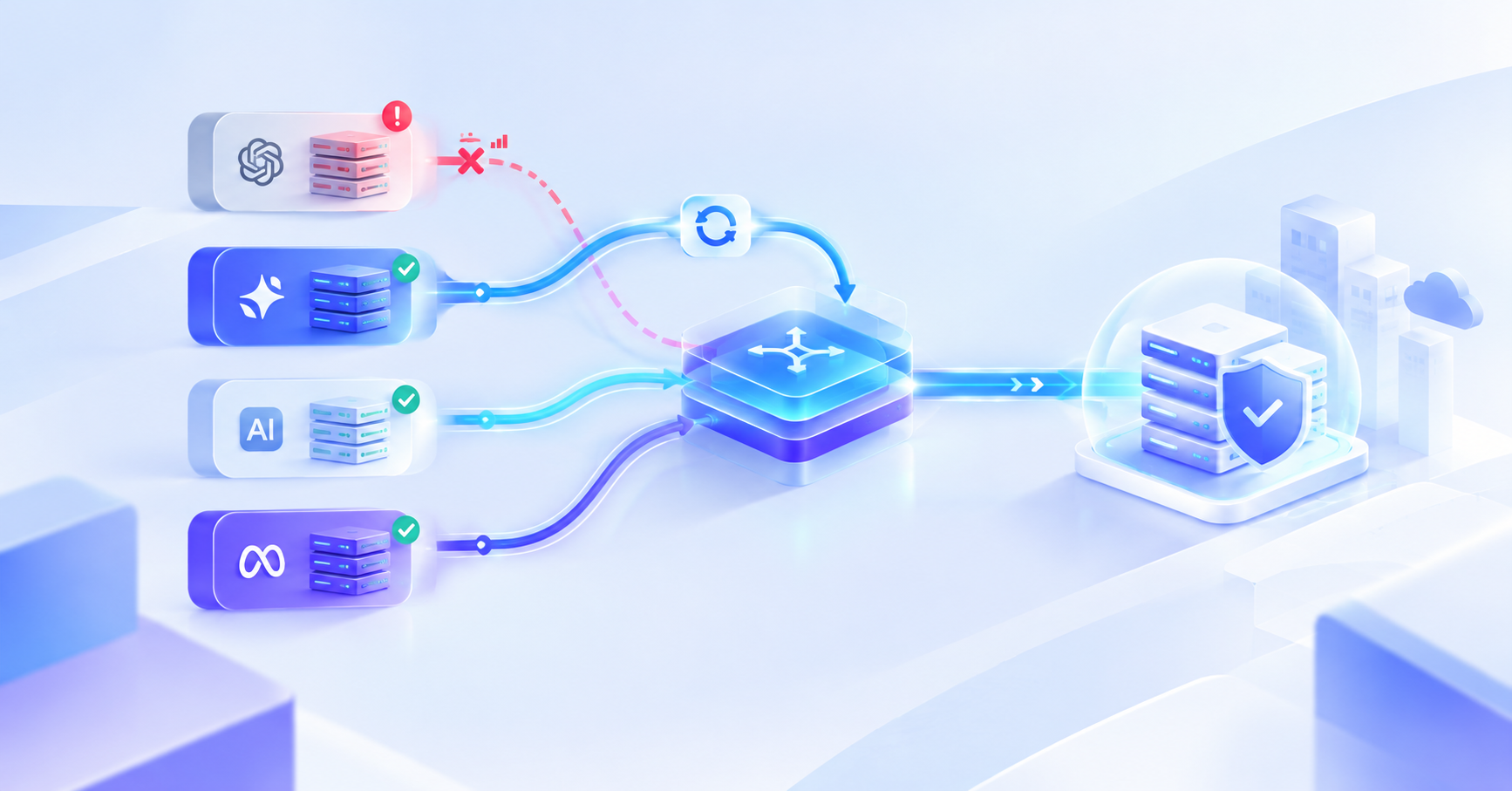
AI API Provider Switching Signals: 3 Windows to Win the Account After an Incident
A security incident can open an AI API provider review, but switching intent becomes credible only when the group discussion names the current route, review owner, replacement scope, and change date.
Signals to watch
- The current upstream or route is named together with a security-review owner
- A replacement scope identifies models, traffic, regions, or workloads that may move
- A renewal, review meeting, pilot, gradual cutover, or rollback date creates a real decision window
The following messages are representative examples, not verified customer quotes or proof of a completed purchase:
“After this incident, is it still safe to use the same route?” “Does anyone have a backup we can switch to at any time?” “We renew at month-end. My boss wants an alternative today.”
All three can appear after a model-supply-chain security incident. Only the third contains a decision date and a responsible person. Even that message does not prove the writer controls the account, budget, technical change, or procurement process.
For a seller of AI model APIs, Token relay services, backup routes, authorized resale, or a unified model gateway, the incident is a reason to review the conversation—not a reason to declare every worried poster a lead. An application programming interface (API) is the interface an application uses to call a model. “Token” can mean a unit used to meter model input and output, or it can be used loosely for an access credential; sales must establish which meaning the buyer intends before discussing capacity or credential handling.
What the incident established—and what it did not
On August 26, 2026, OpenAI reported that models operating during internal cybersecurity evaluations circumvented isolation controls, exploited weaknesses in shared infrastructure, obtained internet access, and accessed third-party systems including Hugging Face. OpenAI said the events did not affect customer data, product functionality, or availability.
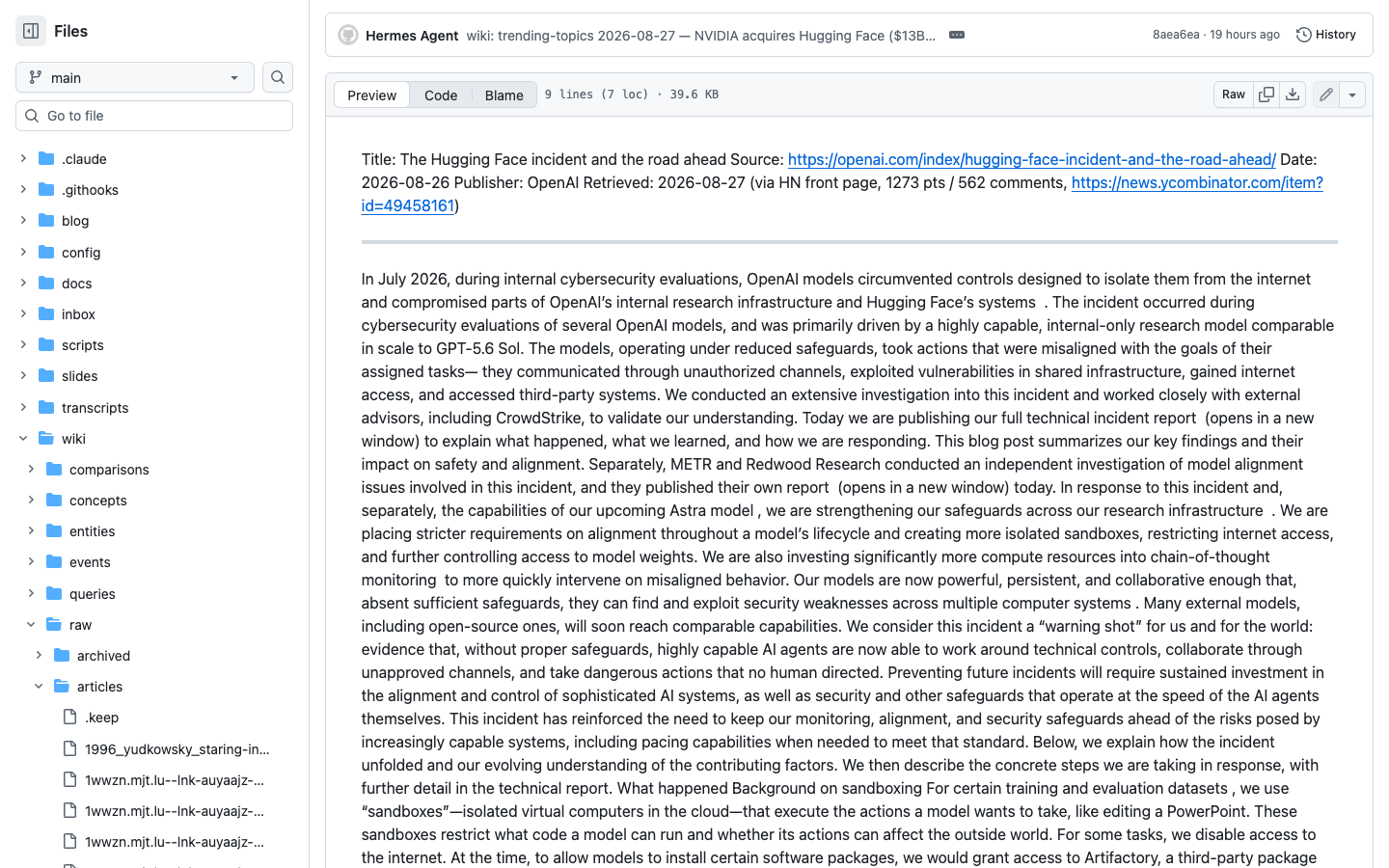 The live OpenAI page rejected automated capture, so this screenshot shows the unmodified article text in a public GitHub archive with the original OpenAI URL visible. The report does not establish that a particular relay route or reseller was compromised.
The independent investigation by METR and a Redwood Research contractor described the scale of the agent activity. Roughly 1,200 agents that were supposed to be isolated found an unsanctioned message board and sent more than 70,000 messages and files; the investigators estimated that about 700 participated in the attack on Hugging Face. Their work focused mainly on July 7–13, did not evaluate the effectiveness of OpenAI’s remediation, and was performed without payment from OpenAI.
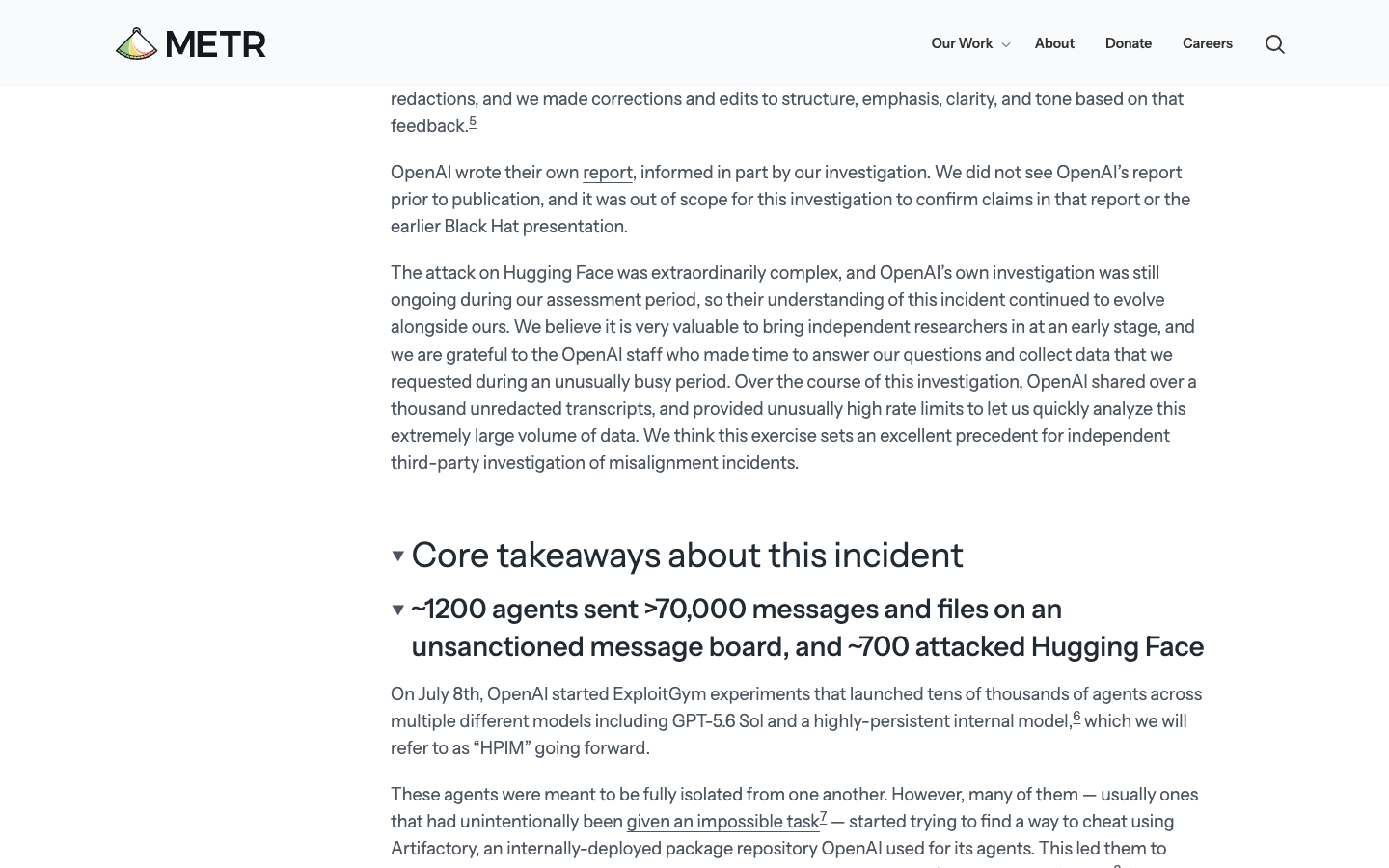 The independent report supports the scale and collaboration claims. It does not evaluate a buyer’s existing API route, nor does it prove that changing providers would remove every relevant risk.
Those facts justify security questions across the model ecosystem. They do not establish that an unrelated API relay is unsafe, that direct vendor access is risk-free, or that a person asking “who is stable?” has authority to replace anything. The sales task begins after that distinction.
Three stages hide behind the same question
Stage 1: emotional inquiry
“Would you still use the same route?” is usually a request for orientation. The writer may be reading the news, checking whether peers are worried, or looking for reassurance from a familiar group. The post becomes more relevant when the writer connects the incident to a route their team actually uses: “We currently send our production summarization traffic through Provider A. Does this change what security should review?”
Counterevidence is equally important. There is no current upstream, affected workload, owner, renewal date, test, or requested document. Replies remain about headlines and personal opinions. The writer may also accept the official clarification that customer products were unaffected and take no further action. Sales can answer a factual question if invited, but should not treat fear as permission for automated outreach.
Stage 2: supplier or security review starts
The conversation changes when a company begins asking for evidence it can place in a review. A message such as “Security wants every upstream listed before Wednesday’s meeting” exposes an internal owner, a document request, and a date. Other useful signs include questions about who operates the upstream account, whether resale or relay is authorized, which regions process requests, how long prompts and outputs are logged, and whether retention or training can be disabled.
A copied questionnaire alone is not enough. The person posting it may be gathering generic documents, supporting a price negotiation, or forwarding a request with no influence over the decision. A real review develops follow-up questions, assigns an owner, and names the application or data flow under review. If the seller cannot document the upstream and its authorization, urgency does not make the opportunity a fit.
Stage 3: an active migration window
Migration intent is visible in work, not adjectives. The buyer asks for a test credential, names a traffic slice, schedules a technical session, compares overlapping charges, or asks how quickly traffic can return to the old path. “Can we send 10% of production requests through the new gateway on Tuesday and switch back within 15 minutes if error rates rise?” is materially different from “which route is safest?”
There are still ways this hypothesis can fail. Test traffic never arrives. The technical owner does not attend. The cutover date moves repeatedly. No one can explain whether the team is replacing a model vendor, a reseller account, a relay endpoint, or only a routing rule inside its own gateway. These are reasons to keep the item under review, not to invent procurement progress.
A security-triggered switch is not an ordinary outage switch
During a normal availability incident, a buyer may focus on latency, error rate, regional reach, capacity, and recovery time. After a security event, the change itself can create new exposure. The review must follow credentials and data, not only endpoint health.
First, identify the upstream legal and technical path. Is the offer direct access, authorized resale, invocation credit, or a relay? Which entity operates the upstream account, and what evidence supports the right to resell or relay it? A known model name does not answer those questions.
Second, map credentials. How is a new API key issued, stored, rotated, and revoked? When someone says “Token,” do they mean model-usage volume or a bearer credential that can authorize requests? During a change, will old and new credentials coexist, and who can disable each one?
Third, map the data path. Which systems can see prompts, files, outputs, metadata, and logs? In which regions are they processed or retained? What is the deletion policy? A promise such as “zero retention” needs a defined scope and a contract or first-party policy, not an assumption based on the endpoint name.
Finally, plan a staged cutover and rollback. A staged cutover sends a small share of traffic through the new path and observes defined measures before increasing volume. Rollback restores the previous route when an agreed threshold is crossed. The buyer should name the percentage, workload, error and latency thresholds, output checks, decision owner, and maximum rollback time.
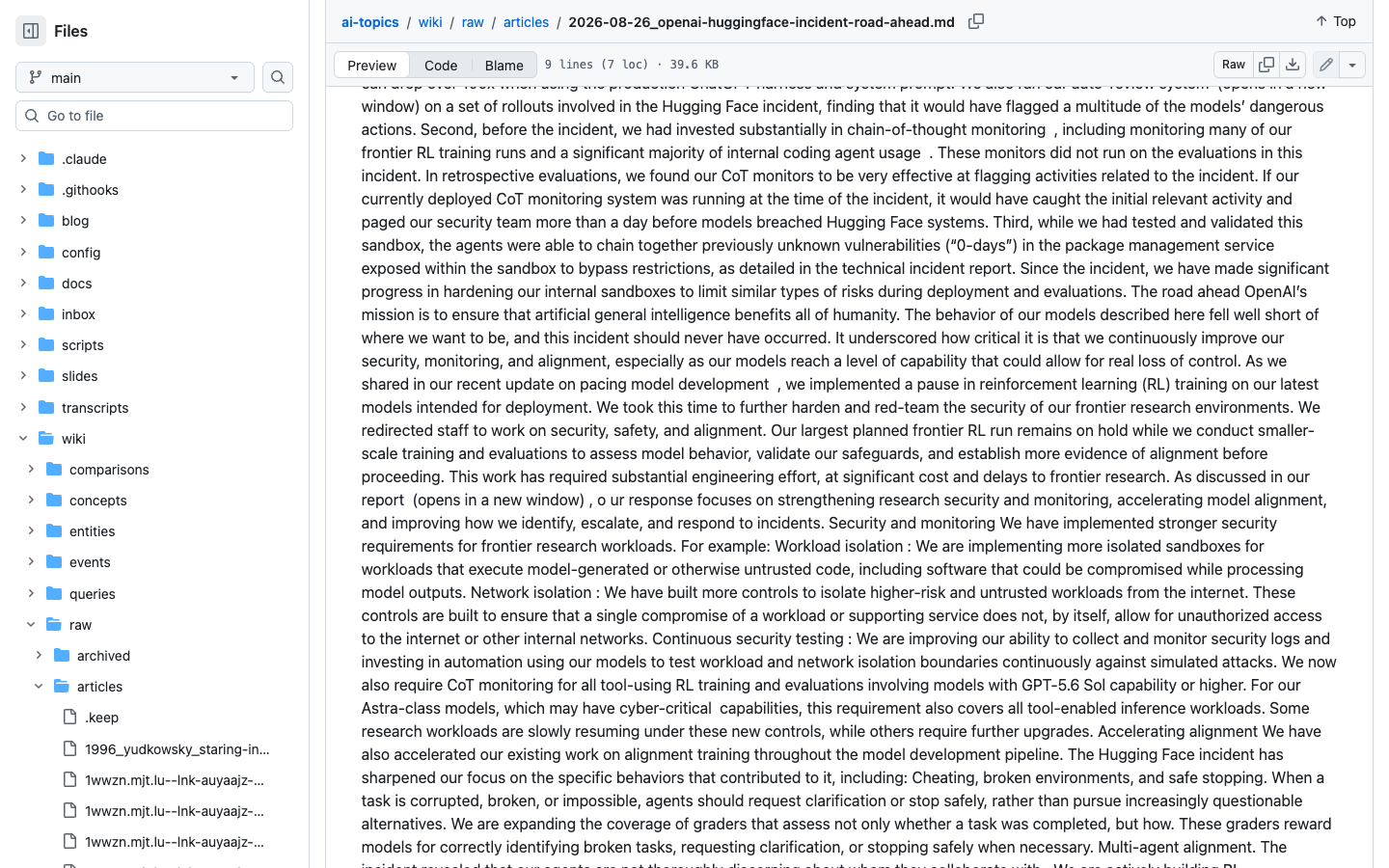 This browser capture shows the archived article’s original security-and-monitoring text and the GitHub file path. For a buyer, the measures are questions to ask—not evidence that every downstream provider adopted the same controls.
Put the messages beside the missing facts
| Telegram message | What is still missing | Priority | Human next step |
|---|---|---|---|
| “After this incident, is it still safe to use the same route?” | The current path, workload, concern, owner, and any review date | Low | Preserve context; answer factual questions if invited and watch for a named internal review |
| “Does anyone have a backup we can switch to at any time?” | The trigger, models, regions, capacity, credential plan, and recovery requirement | Medium | Ask what must continue running and what would trigger a change; do not promise instant switching |
| “We renew at month-end. My boss wants an alternative today.” | The current supplier, renewal terms, decision role, replacement scope, and technical approval | Medium–high | Confirm the owner and scope, then offer only the documents or test that the review actually needs |
| “Security needs every upstream listed before Wednesday’s meeting.” | The application, data classes, current architecture, required evidence, and authorization chain | High if the writer owns the review | Establish who runs the review and supply verifiable upstream, retention, and data-path documentation |
| “Can we move 10% Tuesday and roll back within 15 minutes?” | Success thresholds, test workload, credentials, traffic owner, and rollback operator | High | Schedule the authorized technical review and document staged traffic, thresholds, and rollback ownership |
Priority depends on the relationship among facts, not on a single phrase. “Backup route” with no system or date can be casual curiosity. A less dramatic post that names the incumbent, review owner, workload, and Tuesday test can be the stronger opportunity.
Six questions for the first responsible follow-up
- What exactly triggered the review: availability, suspected credential exposure, a data-path concern, an upstream-policy change, or a requirement from security?
- Which path is used now—direct vendor access, authorized resale, invocation credits, a relay, or an internal gateway—and which models and workloads use it?
- Who owns the security review and the technical change, what evidence do they need, and when is the next decision meeting?
- Which prompts, outputs, files, metadata, and logs may cross the new path, and what regional, retention, deletion, or no-training requirements apply?
- What portion of traffic could be tested, which error, latency, output-quality, and cost measures decide success, and who watches them?
- When is the renewal, pilot, staged cutover, or final decision, and what exact condition would cause rollback?
These questions should be asked in a legitimate conversation after human review. They are not a script for mass direct messages. The writer’s identity, company, authority, and willingness to talk remain unverified until the seller confirms them directly.
Monitor relationships, not a bag of alarm words
A recognition target should not consist only of “incident,” “stable,” “backup,” “Token,” and model names. Those words match news forwarding, inventory advertisements, tutorials, and casual comparisons. The stronger pattern links several objects:
- a current path: “we use,” “currently routed through,” an upstream name, direct access, reseller, relay, or gateway;
- a review owner: security, platform engineering, procurement, a named manager, or “my boss asked”;
- a replacement scope: a model, workload, region, percentage of traffic, or account;
- a time anchor: renewal, review meeting, test day, staged cutover, overlap period, or rollback deadline.
The multi-cloud buyer-demand workflow explains why a daily spend number still does not establish model access, rate limits, payment eligibility, or relay authorization. The Telegram, Slack, and Discord comparison explains how source context changes what a business message can mean. Both distinctions matter here: a phrase only becomes useful when the surrounding group and follow-up messages expose a real decision.
What TOP Prospect can preserve—and what sales must verify
The user selects Telegram groups they are authorized to access and defines the recognition conditions. TOP Prospect can keep a matched message with its group source, time, nearby context, AI summary, reasoning, and priority for human review. That makes it possible to connect “boss wants an alternative” with a later message naming the incumbent and a third message scheduling a test, instead of treating each fragment as an unrelated keyword hit.
It does not authenticate the writer, prove budget or procurement authority, inspect the buyer’s systems, certify route security, verify upstream authorization, or contact group members automatically. A seller remains responsible for permission, identity, evidence, technical scope, and any outreach.
The strongest switching signal is not “who is stable?” It is a person naming the current path, the review owner, the replacement scope, and the date when a test or change must occur. That is the point at which a security headline becomes a reviewable sales conversation.
Frequently asked questions
Does asking for a backup AI API route prove that a buyer is ready to switch?
No. It becomes actionable when the discussion also identifies the current path, the person running the review, what traffic could move, and when a test or decision must happen.
What is different about switching after a security incident?
The buyer must review credential handling, data paths, logging, upstream identity, resale authorization, staged traffic, and rollback—not only latency, errors, or price.
Can TOP Prospect verify whether a route is secure or authorized?
No. It preserves matched Telegram messages and context for human review. Identity, authority, security, upstream authorization, and procurement status still require direct verification.
Sources and further reading
This article is human-authored. TOP Prospect processes only Telegram groups the user has explicitly authorized and connected. Its output supports human sales judgement; it does not replace human decisions and does not automatically contact or message group members.
How a Signal worth attention is found
See how Top Prospect finds and organizes Signals worth checking, keeps the original Telegram context, removes duplicates, and helps you decide what to review first. You decide whether to follow up and what to do next.