Stop promising clients “zero bans”: how an AI API reseller earns trust when the upstream throttles
Upstream throttling cannot be promised away. This article covers how an AI API reseller uses plain disclosure, standby routing, fast recovery, and model degradation to hold enterprise accounts.
“We guarantee no bans. Stable routes. Traffic always clears risk control.”
That line may be the most damaging sentence in an AI API reseller’s sales script.
Across the 2026 model ecosystem, upstream risk policy stopped being a question of whether an account gets banned. It became a question of when, and how many. A reseller that promises absolute stability is either misleading the buyer or misleading itself.
Enterprise buyers do not actually care whether your key survives. They care that when a key does not survive, your stack hands traffic to a standby route fast enough that nobody downstream notices the gap.
If you arrived here searching for AI API reseller high-availability architecture, fallback plans for model API rate limits, or enterprise routing policy, this article takes the counterintuitive path through the trust question: admitting the limit is what wins long-term enterprise accounts.
Transparency holds trust better than concealment
Classic software-as-a-service sales logic teaches suppliers to hide problems. The platform went down? Call it scheduled maintenance. The endpoint errored? Blame network jitter. That habit may survive in low-ticket markets. In enterprise AI API sales it is self-defeating.
The buyer’s IT team understands upstream risk policy better than your sales deck does. When they catch you covering a fault, they do not conclude that you are professional. They conclude that you are unreliable. Once that lands, no discount brings the account back.
Resellers who post in the group chat the moment the upstream throttles — we are seeing limits, we are moving traffic to a standby route — get a different reaction. Three things are communicated at once:
- You read the upstream ecosystem: you treat throttling as normal operation rather than as an accident;
- You have a rehearsed response: the fallback existed before the incident instead of being improvised during it;
- You treat the buyer as a partner: you are selling continuity of business, not a commodity key.
Read cynically, telling a client about a limit looks like a risk. In practice it filters the book. Accounts that walk because you admitted a problem were pricing-only. The accounts that stay are the ones that care about the service level agreement they signed.
The three numbers enterprise buyers ask about instead of price
Many reseller teams assume the buyer’s first concern is the unit price of tokens. In 2026 that assumption is out of date. Token spend is rarely the dominant line in an enterprise AI budget. Revenue lost to an outage is what keeps a chief financial officer awake.
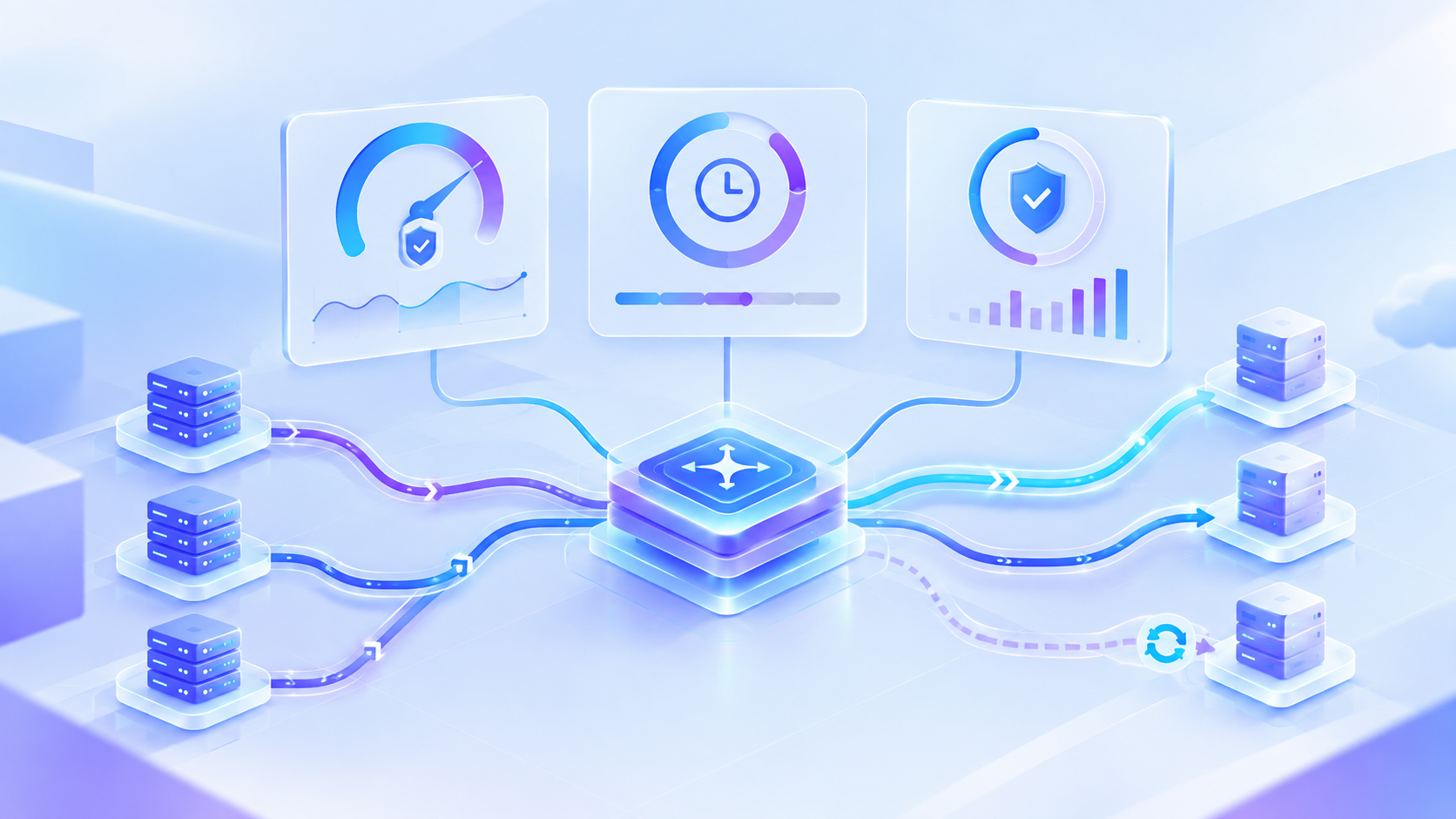
Talk to the owner of a support system handling a million calls a day and the conversation never opens on being a fraction of a cent cheaper. It opens on three numbers:
Availability: what the service level agreement actually commits to
“What availability do you commit to, and what happens when you miss it?”
That is procurement procedure, not hostility. A reseller with no written commitment is removed during compliance review.
Recovery time: how fast traffic can be moved
“When the upstream throttles, how long until traffic sits on a standby route? Five minutes, thirty seconds, or close to nothing?”
For a live support desk a thirty-second gap means thousands of dropped requests and a matching revenue hit.
How much judgement sits in the degradation path
“When the primary model is unavailable, does the request fail, or does it fall back to something lighter? What makes that call?”
This is where technical depth shows. A reseller that forwards requests and a reseller that reroutes and rewrites them are not ten times apart in the buyer’s mind. They are a hundred times apart.
Once the conversation runs on those three numbers, you have left the token-price contest and entered the continuity business.
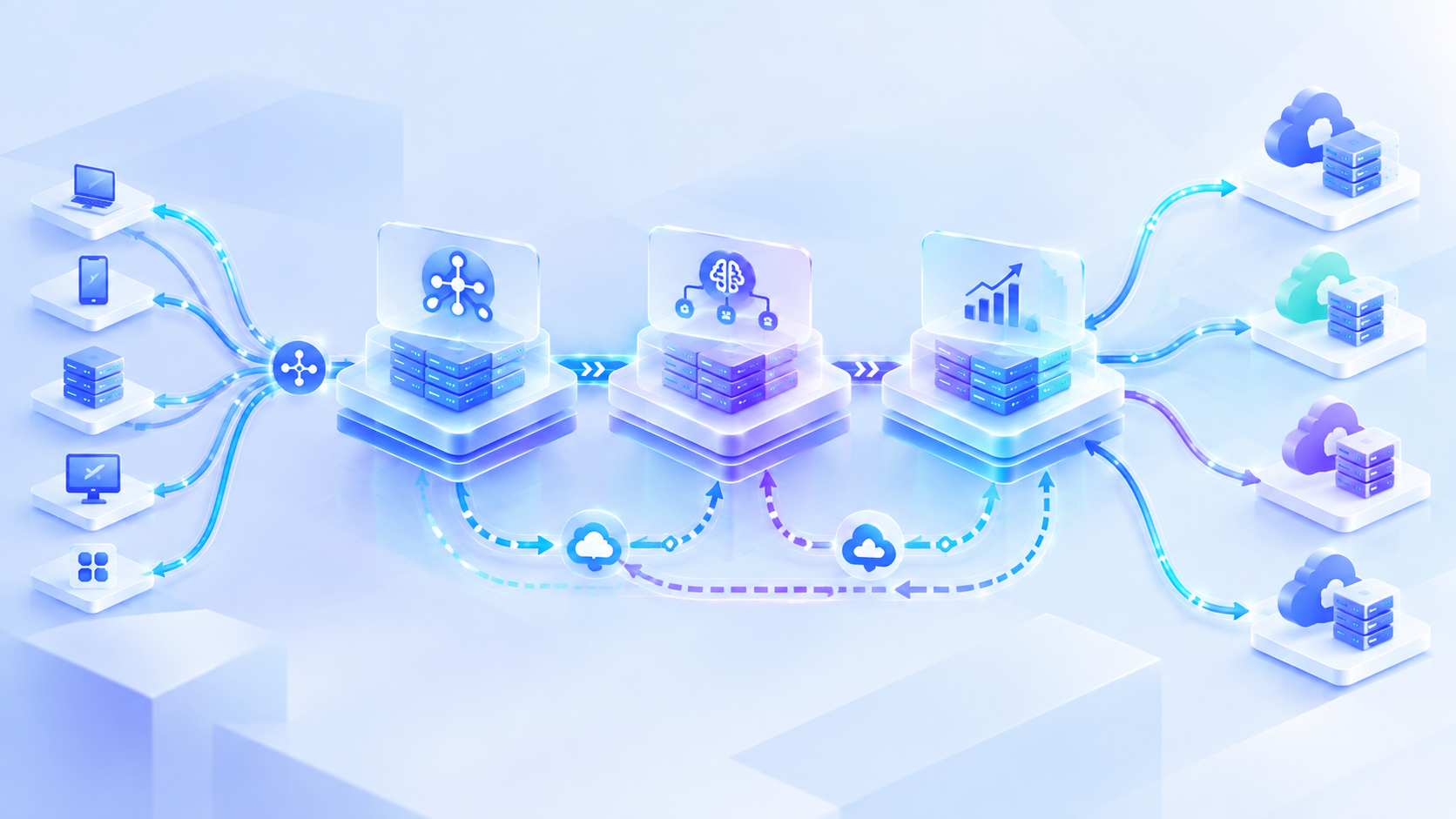
The three layers of a high-availability routing stack
If buyers judge on availability, recovery time, and degradation, the technical moat has to be built in that order.
Layer one: balancing across several providers
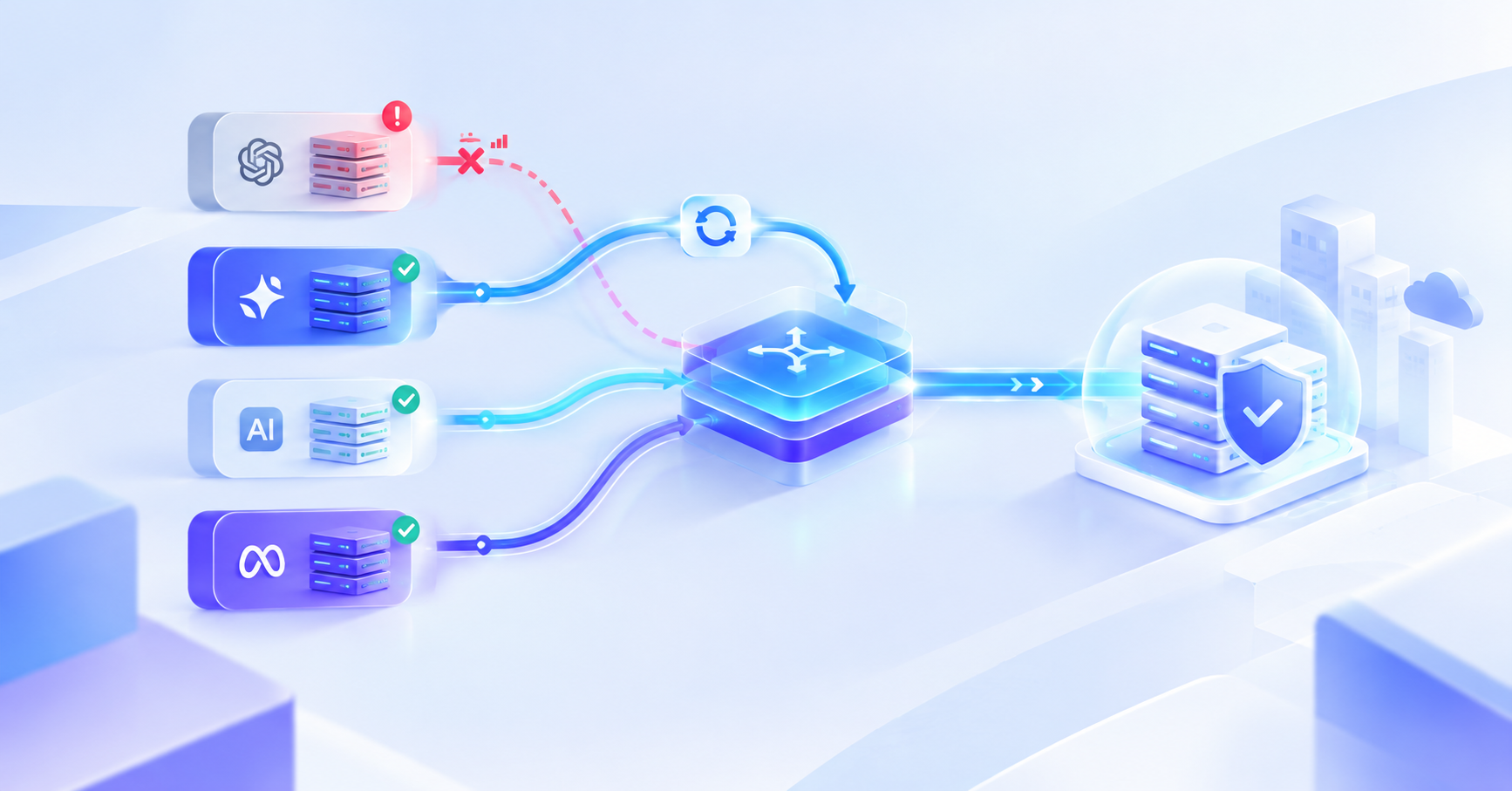
The floor. No single upstream. At minimum three to five major model providers — OpenAI, Anthropic, Google, Meta — with traffic distributed across them.
Signed contracts alone do not deliver this. Resellers holding five upstream accounts still fail when one throttles, because the providers were connected physically while the routing logic kept the application programming interface as a single dependency.
Layer two: semantic-aware degradation
Real routing is not round robin and not a single failover trigger. It matches the prompt to the model that can serve it.
For example:
- A request to write a poem can be served by a cheaper open-weights model;
- A contract review request has to reach the strongest flagship model;
- When the primary model returns 429, the request is rewritten for a standby model and still returns an answer instead of an error page.
That work sits in natural language processing and prompt engineering. Forwarding an HTTP call does not cover it.
Layer three: predictive capacity and cached responses
The most advanced layer does not wait for the incident.
For example:
- Reading upstream risk patterns — the last Friday evening of the month, say — and pre-warming standby capacity before they land;
- Caching responses to prompts that heavy accounts send again and again, so an outage is absorbed rather than forwarded;
- Watching provider health continuously and moving traffic before the error rate crosses a threshold, instead of reacting after the first 403.
Those three layers separate a token reseller from an AI infrastructure provider.
Crisis intelligence: finding the accounts that are genuinely down
When a large upstream throttling event lands, developer groups on Telegram fill with panic inside minutes. Errors. Timeouts. Everything is broken.
For a reseller’s sales and operations team the failure mode is drowning in that noise, or chasing people who were only complaining. What is needed is the short list of accounts facing a real outage, contacted while their problem is live.
This is where TOP Prospect (Top商业线索) goes past filtering. It becomes a capture layer for business-continuity crises.
Teams define keyword combinations for an outage — 403, request timeout, service down, support desk is down, need a backup — alongside exclusions such as free credits or cracked keys. When a discussion matches, TOP Prospect pulls the original message, the sender identifier, and the surrounding thread into a structured list. Vague complaints that keyword filters miss, such as “this market is dead, boys”, need the surrounding context before anyone can separate venting from a real request for help.
Just as useful is the history behind the sender. If an identifier has spent three months discussing enterprise service levels, high-availability architecture, and a million daily calls, then today’s error report is likely a real outage at a real account rather than a free-tier complaint.
In that chain TOP Prospect plays the analyst, not the account manager. It lifts the signal — original text, source, surrounding context — out of the panic and hands it to a person who can act on it. Whether the account is worth pursuing, what to quote, and whether to open a direct message stay with your team. The tool does not decide for you. It puts you in front of the decision earlier than your competitors.
That lead time is what turns a survival crisis into a demonstration of operational depth.
Closing
It is three in the morning and a cross-border e-commerce brand’s support desk has stopped answering.
The operations lead posts in a group: “Looking for a stable AI API. Current provider is down again, 3000 messages backed up, my boss is furious.”
Dozens of replies arrive within seconds. We are stable. We are cheap. We clear risk control.
One reseller’s sales person does not pitch. A direct message goes out instead:
“I understand the pressure. We saw the same upstream limits, but our routing had already moved to a standby provider and our own accounts kept running. If it helps, I can issue you a temporary key now so you can test stability yourself. We can talk about a contract once you are back up.”
By the next morning the account had switched, and brought two peers along.
In a crisis nobody wants a pitch. They want a way out. A reseller whose routes move in seconds is protecting more than token spend. It is protecting the product the client’s business runs on.
If your team sells AI API access inside the Telegram ecosystem, the next throttling incident does not have to be spent scrolling groups and hoping. TOP Prospect turns every upstream crisis into a list of accounts worth contacting. To see how it surfaces real outage signals ahead of the noise, visit topprospect.net.
This article is human-authored. TOP Prospect processes only Telegram groups the user has explicitly authorized and connected. Its output supports human sales judgement; it does not replace human decisions and does not automatically contact or message group members.
How a Signal worth attention is found
See how Top Prospect finds and organizes Signals worth checking, keeps the original Telegram context, removes duplicates, and helps you decide what to review first. You decide whether to follow up and what to do next.