“Need an FCC Report Friday” Is Not Yet a Test Plan
Route an FCC equipment-authorization request through radio function, authorization procedure, responsible party, sample revision, filing and label evidence before quoting tests.
Signals to watch
- A launch team asks for an FCC report but does not list the device radio functions or US marketing date
- A factory supplies a test report for an earlier enclosure or module while host and antenna changes remain unexplained
- A product page shows an FCC ID that has not been connected to the applicant, exact model or public grant record
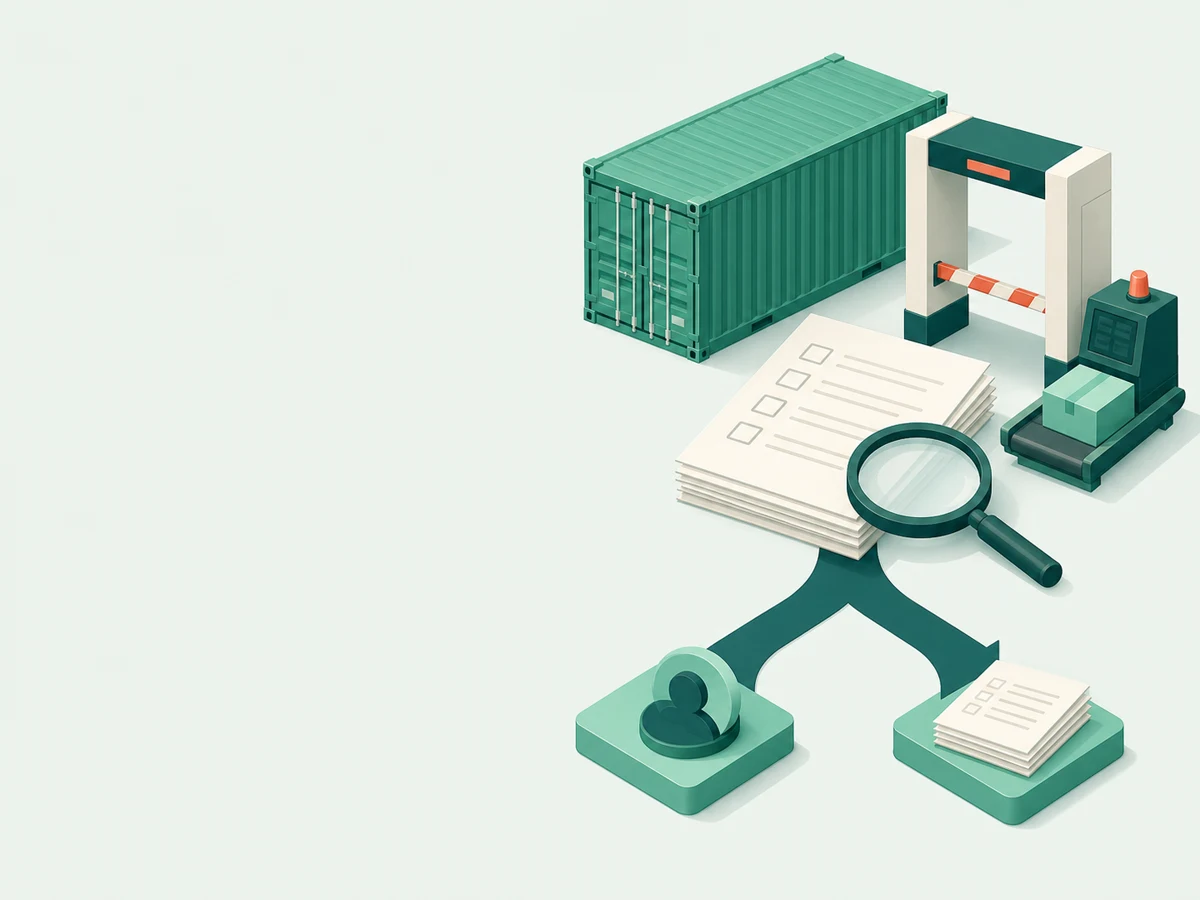
An “FCC report” is not a single product. Before quoting, identify what the device intentionally transmits, what else can emit radio-frequency energy, which rule part applies, and whether the authorization route is certification or supplier declaration of conformity. Then connect the exact production revision to the test evidence, responsible party, filing and label. A report from a similar enclosure or module is a lead for review, not automatic coverage.
Definition: FCC equipment authorization is the process used to show that radio-frequency devices marketed or operated in the United States comply with applicable Federal Communications Commission technical and administrative rules. Part 2 Subpart J defines authorization procedures including certification and Supplier’s Declaration of Conformity (SDoC). Certification involves an application and grant; SDoC places specified compliance responsibility on the responsible party in the United States.
The intake starts before the sample arrives
An RF and electronics laboratory sales lead watches hardware-development, contract-manufacturing, wireless-module and US marketplace Telegram groups the laboratory has deliberately connected and may access. The useful buying Signal is not a lone “FCC” keyword. It is a named device, a changed radio or enclosure, incomplete authorization evidence and an approaching sample, retailer or launch decision.
Real requests arrive in pieces. An illustrative composite might read:
“Need FCC report Friday. Same Wi-Fi module as old unit.”
“New metal case + external antenna. US listing next week.”
“Supplier sent PDF and an ID, not sure whose.”
This is not a real prospect, device, report, grant or launch. It leaves the Wi-Fi generation, bands, transmit modes, antenna type and gain, module grant conditions, host processor emissions, simultaneous radios, product revision, responsible party and sample readiness unknown.
If the laboratory sees it a day late, the team may ship an unrepresentative sample or promise Friday delivery before learning that the antenna and enclosure changed the evaluation. Early review protects a concrete decision: what must be tested, what may be reused, and which party must supply or file the remaining evidence.
List every RF function in ordinary product language
Start with what the user can make the product do. “Smart gateway” is not an RF inventory. Write separate rows for 2.4 GHz Wi-Fi, 5 GHz Wi-Fi, Bluetooth, cellular, NFC, wireless charging, switching power supply, high-speed digital ports and any other intentional transmitter or unintentional radiator function.
For each row, obtain the operating band, protocol, maximum configured power, antenna, simultaneous mode, module part number and regional software restriction. Record whether the function is present, disabled in US firmware or physically absent from the US SKU. A menu toggle is not necessarily a secure operating restriction.
This first inventory determines which technical rules need qualified review. It also reveals why an earlier “FCC report” may cover only one subsystem. The official FCC equipment-authorization page is the agency starting point; at planning time it returned HTTP 403 to automated access, not 404. The access result is recorded rather than replaced with an unofficial summary.
Select the procedure before selecting tests
47 CFR Part 2 Subpart J contains the equipment-authorization procedures. Certification is used for equipment that the applicable rules require to be certified. A certification application contains specified exhibits and measurement evidence and results in a grant through the FCC or an authorised Telecommunications Certification Body (TCB). The FCC ID identifies the grantee and equipment under that certification record.
Supplier’s Declaration of Conformity is a different procedure. It does not turn “self declaration” into “no testing and no records.” The responsible party must meet the applicable requirements, maintain compliance information and provide required user information. Some products contain functions subject to different procedures, so the intake may have more than one row.
Do not pick certification because the client asks for an FCC ID, and do not pick SDoC because the product lacks one. Classify the equipment under the applicable rule parts first.
Put the old report beside the current engineering change
Open the earlier grant and report, then compare them with the product to be marketed. The comparison should include:
- grantee, FCC ID, model family and grant notes;
- radio module hardware and firmware;
- antenna type, gain, cable and placement;
- enclosure material and shielding;
- power supply, clocks, interfaces and peripherals;
- simultaneous-transmission combinations;
- human-exposure conditions and installation distance; and
- labelling and user instructions.
An authorised module may provide valuable evidence. It does not make host integration invisible. A different antenna, co-located transmitter, metal enclosure, portable-use condition or module modification can change the required analysis. Conversely, the right records may show that a bounded host evaluation is appropriate instead of repeating every module measurement.
The laboratory should write one of three states for each old evidence object: applicable as-is with stated basis, applicable only after named verification, or not applicable to the current revision. “Same module” alone is none of those states.
Keep the sample, report and filing on one revision
Before accepting the sample, photograph its label, enclosure, antenna path, ports, power supply and internal assemblies. Record hardware, firmware and software versions. Compare schematics, block diagram, bill of materials and operational description to what is physically present.
When engineering modifies the sample for worst-case operation, retain the change and justification. When a test fails or is repeated, keep the configuration and result rather than exporting only the passing chart. The final report must identify what was measured, how it was configured, which limits and methods applied, and which uncertainty or instrumentation records the laboratory’s quality system requires.
The filing is another object. For certification, connect the report and exhibits to the applicant/grantee, FCC ID, TCB or FCC record and final grant conditions. The FCC Equipment Authorization System can be searched for a public grant, but a similar model or copied ID does not establish coverage for the device in hand.
Price the next evidence decision, not a generic certificate
A useful first quote can separate:
- authorization and rule-part assessment;
- module/grant and engineering-change review;
- pre-scan or debugging support;
- defined compliance measurements;
- certification application/TCB support or SDoC record package;
- FCC ID, label and user-information review; and
- post-test engineering change assessment.
This makes exclusions clear. The quote does not certify that a supplier’s ID is valid, guarantee a passing result or promise a grant date before the filing owner and evidence are known. It also separates FCC radio-frequency work from product-safety, EMC, carrier, cybersecurity or foreign-market approvals that may be requested at the same time.
For another test request where product identity and the evidence object are easily confused, see the button-cell test-report intake. The RoHS technical-file repair shows why a chemical-compliance document request may not be a testing request at all.
TOP Prospect can preserve authorised group fragments, source, time, repeated messages and human review notes until the laboratory sales lead opens the intake. Its current matching-target interface saves configuration and does not automatically create candidates. It cannot read private groups, inspect a device, choose rules, perform measurements, validate an FCC ID, file an application or contact the author. The public workflow keeps those decisions with people and authorised systems.
Key facts
- FCC equipment authorization is governed by the applicable technical rules and the procedures in 47 CFR Part 2 Subpart J.
- Certification and Supplier’s Declaration of Conformity are different authorization procedures.
- A certified device’s FCC ID connects to a grantee and public authorization record; it is not just a decorative label string.
- A module grant or old report must be checked against the exact host integration, antennas, modes and engineering changes.
- A passing test report is evidence, while a certification grant and an SDoC compliance record are different administrative objects.
- Product safety, carrier acceptance and non-US market approvals are outside an FCC RF test report unless separately scoped.
FAQ
Does every electronic device need an FCC ID?
No. The applicable authorization procedure depends on the equipment and rules. Certified equipment carries an FCC ID, while other equipment may follow supplier declaration of conformity or another applicable requirement.
Can a host product reuse a radio module test report?
Sometimes module authorization can reduce work, but host integration, antennas, simultaneous transmission, modifications, labelling and other emissions still require an exact rule-based review.
Is a passing laboratory report the same as an FCC certification grant?
No. A test report is evidence in a certification application. Certification is an equipment-authorization grant issued through the FCC or a recognised Telecommunications Certification Body process.
What should the laboratory request before quoting?
Request the exact product and revision, user functions, radio technologies and bands, schematics and block diagram, module and antenna details, responsible party or grantee, existing grants and reports, label plan, samples and US launch date.
Reviewed by TOP Prospect Editorial Team on 20 August 2026 against the FCC equipment-authorization program materials, 47 CFR Part 2 Subpart J and the FCC Equipment Authorization System. Rule classification, test scope and filing conclusions require current official sources, representative equipment and qualified review.
Frequently asked questions
Does every electronic device need an FCC ID?
No. The applicable authorization procedure depends on the equipment and rules. Certified equipment carries an FCC ID, while other equipment may follow supplier declaration of conformity or another applicable requirement.
Can a host product reuse a radio module test report?
Sometimes module authorization can reduce work, but host integration, antennas, simultaneous transmission, modifications, labelling and other emissions still require an exact rule-based review.
Is a passing laboratory report the same as an FCC certification grant?
No. A test report is evidence in a certification application. Certification is an equipment-authorization grant issued through the FCC or a recognised Telecommunications Certification Body process.
What should the laboratory request before quoting?
Request the exact product and revision, user functions, radio technologies and bands, schematics and block diagram, module and antenna details, responsible party or grantee, existing grants and reports, label plan, samples and US launch date.
Sources and further reading
How a Signal worth attention is found
See how Top Prospect finds and organizes Signals worth checking, keeps the original Telegram context, removes duplicates, and helps you decide what to review first. You decide whether to follow up and what to do next.