How to Find Clients for Payment Services: Qualifying Telegram Card Requests
How to find clients for payment services in Telegram communities: distinguish virtual-card spending needs from acquiring problems, ask useful questions, and qualify before quoting.
Signals to watch
- The speaker describes a business, a payment problem and an unresolved purchasing decision.
- A spending figure has an explicit period and meaning, rather than being treated as verified revenue.
- The need concerns documented card controls, statements or merchant collection, not bypassing checks.
- Service eligibility and every contact decision remain subject to human review.
“Added $5,000 and the ad account stopped working. Need another card.”
For a virtual-card salesperson, that sounds like an opening. It is also missing the most useful detail: did a card payment fail, or did the advertising platform restrict the account?
If you are working out how to find clients for payment services, start in communities where businesses discuss advertising spend, bookkeeping and online-store operations. Look for an unresolved payment task, preserve the surrounding discussion, and ask about the failure before quoting. This approach gives payment business development (BD) representatives a reason to speak with someone; it does not establish their identity, eligibility or willingness to buy.
Key takeaway
- Card issuing serves business spending; acquiring serves merchants collecting customer payments. Route the discussion before pitching.
- A business description, specific problem and decision date give you questions to investigate—not a verified customer.
- A virtual card cannot guarantee that an advertising account will avoid restrictions.
- TOP Prospect can organize available Telegram source material for review; people still verify the business and decide whether to contact it.
The messages and suggested replies below are hypothetical examples, not customer quotations or reported sales results.
How to find clients for payment services without following every “need a card” post
Choose communities by the work your prospective user does. An advertising-operations group can surface questions about card limits and campaign budgets. A DTC brand community—DTC means selling directly to consumers—can surface store-level expense reporting. A finance group can surface month-end reconciliation problems.
A group filled mainly with card sellers may produce plenty of payment vocabulary and few prospective buyers. Read a sample of its recent conversations: are people describing their own operations, or repeatedly posting price lists? Can you identify who is asking a question and what remains unresolved? Start with a manageable set of relevant groups and reassess them as their discussions change. There is no universal group size that makes a source valuable.
Search for combinations such as “separate statements” plus “three stores,” “card limit” plus “campaign next week,” or “monthly subscription” plus “finance approval.” These are starting points for reading, not a keyword formula that proves intent. “Our daily spend is $5,000” could be a merchant explaining a need, an agency describing client budgets, or a supplier advertising capacity.
For a payment gateway salesperson, different phrases matter: “customers cannot check out,” “need local payment methods,” or “refunds are not reconciling.” The companion article on where payments BD can find new merchants covers those acquiring and market-entry discussions in more detail.
First ask: is the business spending money or collecting it?
“Payment problem” is too broad to qualify a prospect. A virtual credit card (VCC) or another virtual business-card product is used to pay expenses. A merchant acquiring service enables a business to accept customer payments. Some providers offer both, but one does not automatically solve the other.
| Hypothetical message | Possible need | First useful question |
|---|---|---|
| “Three stores share one card and finance cannot assign the charges.” | Card-level expense reporting or spending controls | “Do you need separate cards, separate reports, or both?” |
| “The advertising charge is being declined.” | A payment authorization problem | “What error did the issuer or platform return, and when?” |
| “My advertising account is restricted.” | Platform review, possibly alongside a billing issue | “What does the restriction notice actually say?” |
| “Customers cannot pay on our checkout.” | Acquiring or payment integration | “Which market, payment method and checkout step are affected?” |
| “Sales settled, but the payout has not arrived.” | Settlement support or a provider review | “What payout status and explanation has the current provider given?” |
This split protects your presales time. A card demonstration is not a response to a delayed merchant payout. Likewise, a low acquiring rate is not an answer to a finance team asking for separate advertising statements.
Be precise about what you can offer. Stripe Issuing’s spending-controls documentation, checked on September 8, 2026, describes controls such as spending limits and merchant-category restrictions. Those are examples of payment controls, not promises about isolating browser environments or avoiding advertising enforcement. Your own provider’s supported capabilities must be checked separately.
Two card requests, two different next steps
A: the requested outcome is outside your service
“Need an anonymous card with no identity checks. Must get restricted ad accounts running again.”
Do not turn this into a claim that you have identified a criminal. The immediate decision is narrower: you cannot offer the requested bypass or guarantee.
A sufficient reply is: “We require the applicable onboarding checks and cannot promise to restore a restricted advertising account.” If the person insists on avoiding those requirements, stop the sales conversation. You do not need to collect more personal information to justify declining an unsuitable request.
B: enough detail to ask a relevant question
“We sell fitness equipment through our own store. Added $5,000 for ads, then the account was restricted. We also need separate card statements for three stores. US company; happy to complete onboarding. Finance wants an option before next Friday.”
This message contains two separate problems: an advertising restriction and a reporting requirement. The reporting requirement could fit a card provider even if that provider cannot resolve the restriction.
There are also important unknowns. Is $5,000 a one-off balance or recurring spending? Are the stores owned by the same entity? Does the writer manage payments or only campaigns? Saying “US company” and agreeing to checks does not answer any of those questions.
A useful Signal tells you what to verify next; it does not certify the business behind the message.
Ask about the notice before promising a replacement
A measured opening could be:
“The separate-statement requirement may fit our service. First, did the payment fail, or was the advertising account restricted after funding? Please share only the relevant error wording with sensitive details removed. We cannot promise that replacing the card will restore the account.”
Meta’s restricted-account help page provides the official starting point for account troubleshooting. Do not substitute a sales script about “clean” cards for the platform’s own review process.
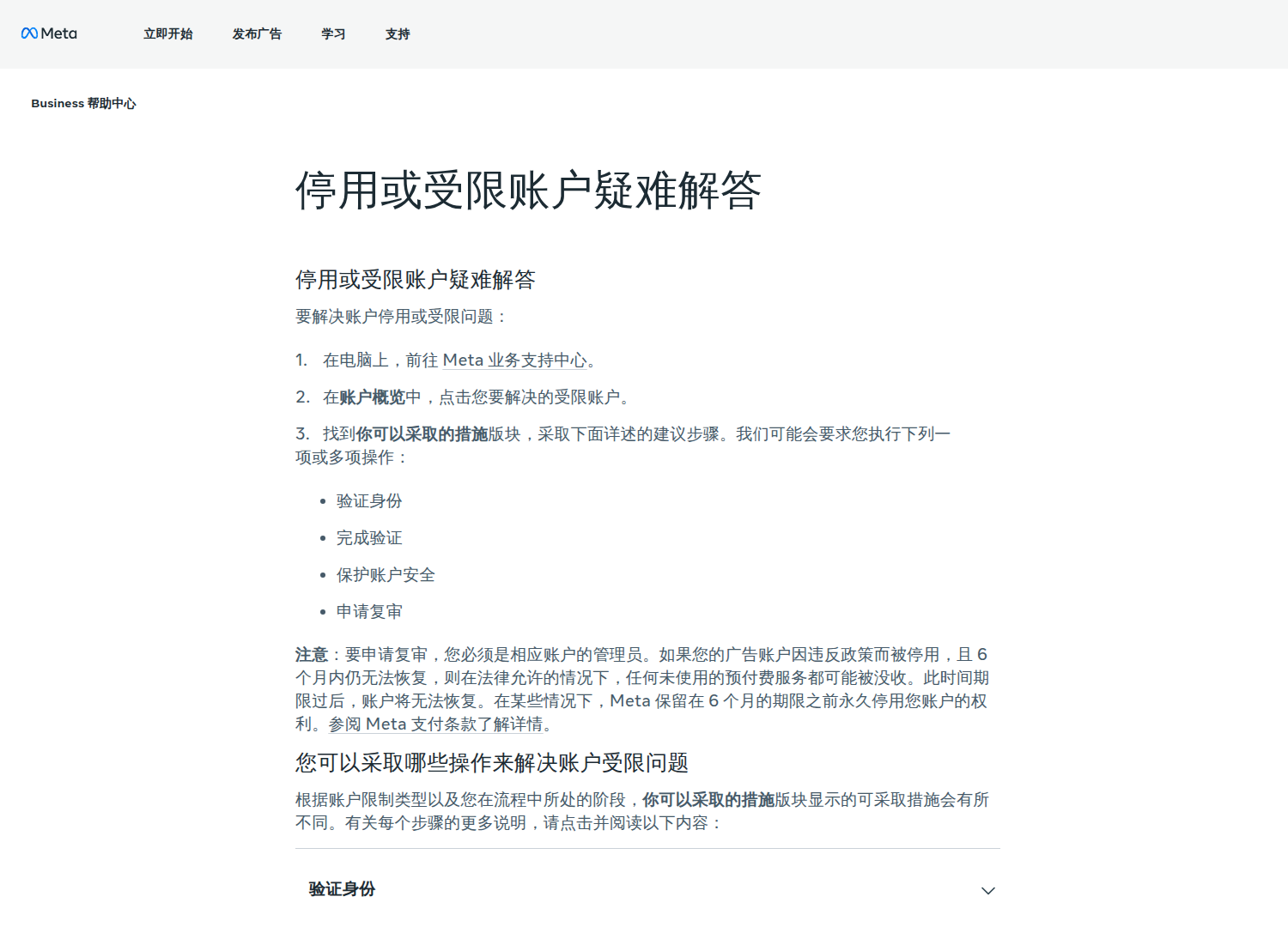 Source: Meta Business Help Center, captured September 7, 2026. The page shows account overview, identity and security checks, and review steps; it is not an explanation of Meta’s internal scoring.
Once the complaint is separated, ask about the serviceable part. “For those three stores, do you need an individual limit per card and a transaction export with store labels? Who will reconcile the export?” A concrete answer helps you decide whether to bring in your product specialist.
Avoid diagnosing a policy violation from one phrase on a landing page. A page can have requirements beyond the payment method: Google’s destination requirements cover the experience after an ad click. They are Google rules, not evidence about a particular Meta decision.
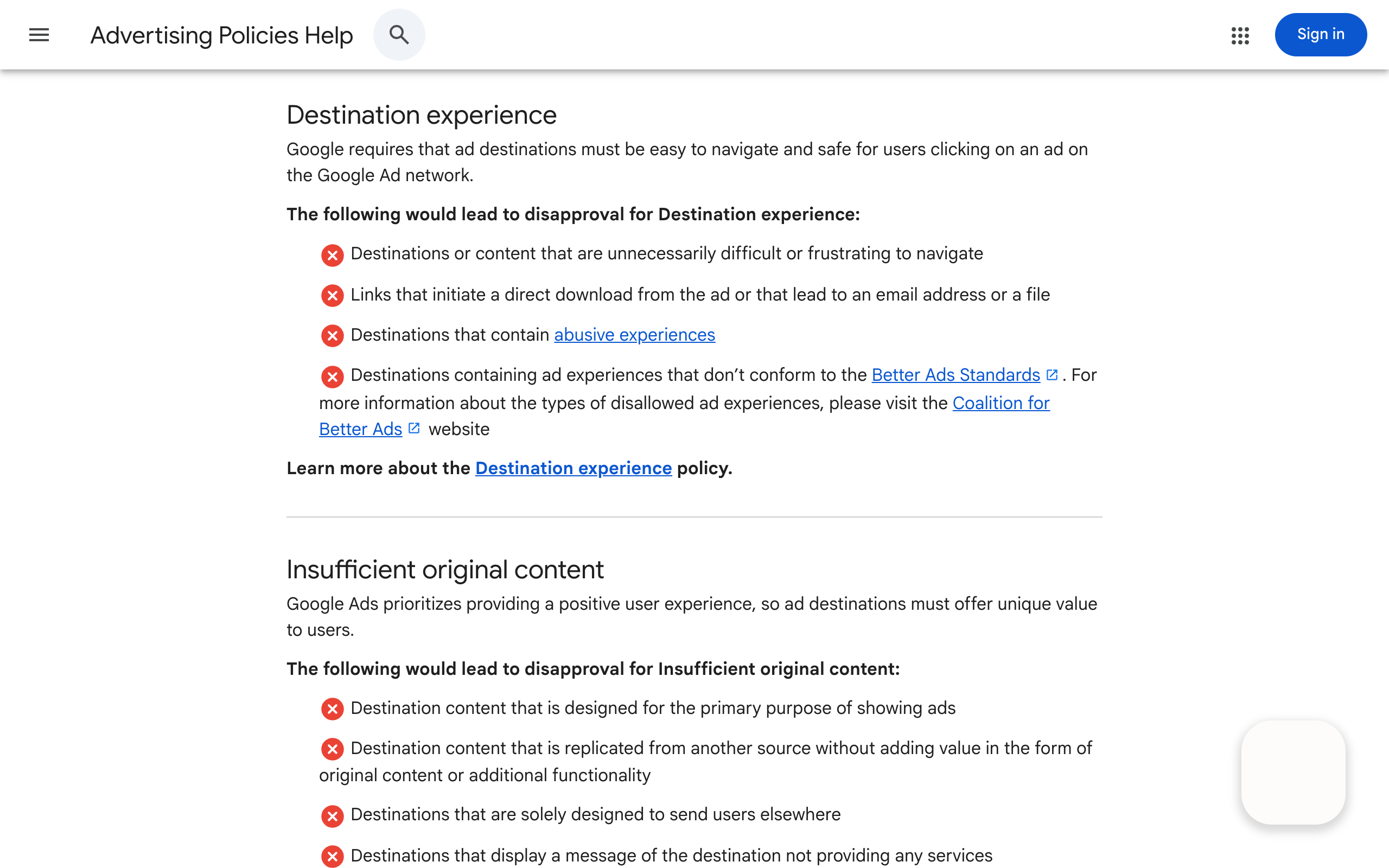 Source: Google Ads destination requirements, captured September 8, 2026. The page documents landing-page requirements separately from the payment instrument.
You can help identify which team should investigate without claiming to know why an account was restricted. That is a more useful boundary than promising free advertising consultancy you cannot deliver.
Qualify the business before offering a test
For the hypothetical fitness-equipment company, the next conversation should establish three things.
First, what the figure means. Ask whether $5,000 was the latest top-up, a daily advertising budget or total spending across clients. A top-up is not revenue, and an agency’s client budgets are not necessarily spending that your company can onboard.
Second, who would contract and use the service. Ask for the business jurisdiction, business activity and authorized contact through your normal process. KYC means “know your customer”; business onboarding may also require company and ownership verification. Stripe Connect’s identity-verification documentation illustrates that requirements depend on the account and jurisdiction. It is not an eligibility checklist for every VCC issuer.
Third, what decision is actually due. Does “next Friday” mean a reporting review, an approved supplier change or simply a campaign launch? Ask who owns onboarding and what finance needs to evaluate. Only offer a test under your provider’s approved onboarding and testing process; a public Telegram conversation is not the place to request passports, full card details or banking credentials.
If the prospect wants a new advertising account as a workaround, do not package that into your card offer. Google’s account-suspension guidance, checked September 8, 2026, warns that related and newly created accounts may also be suspended.
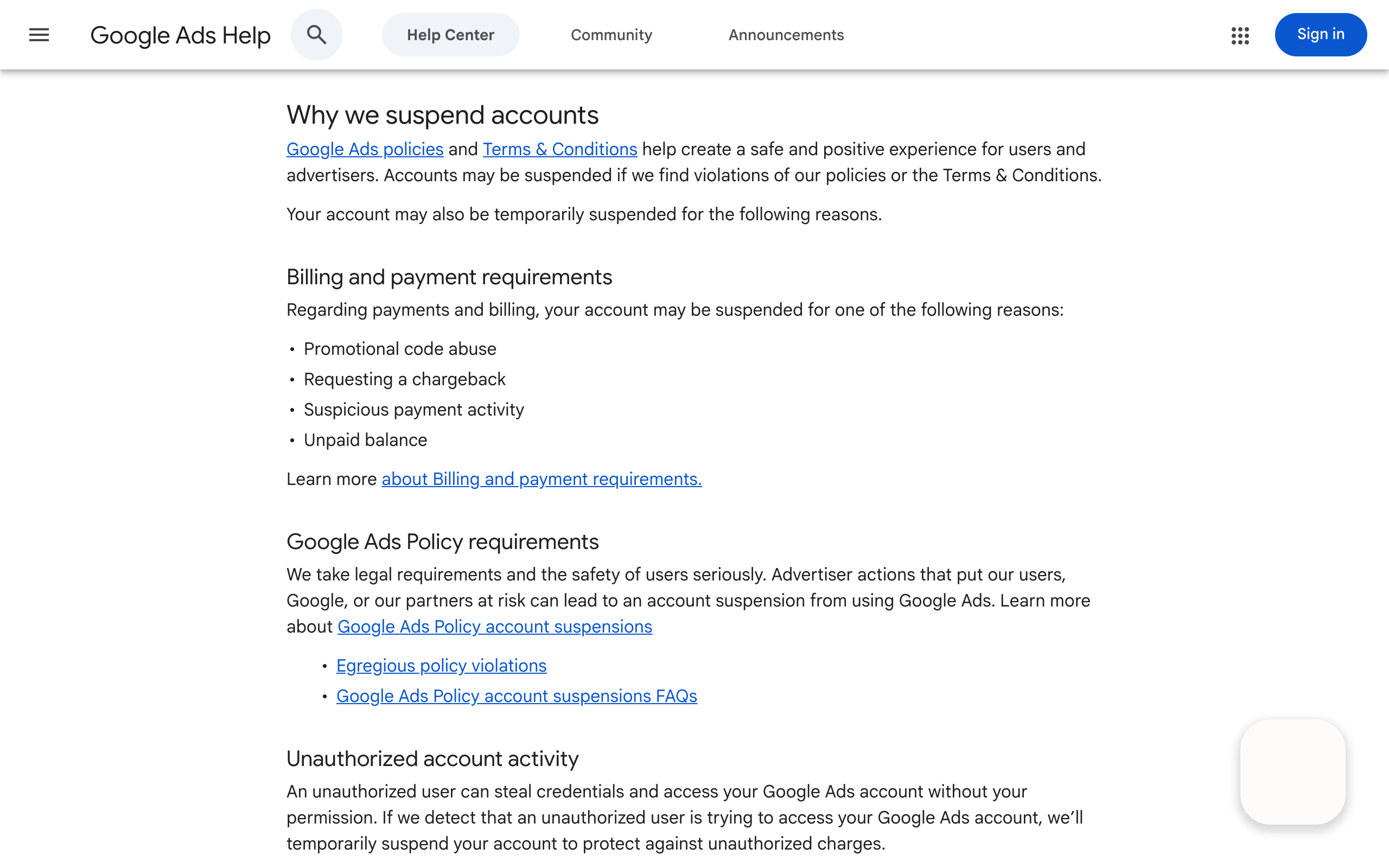 Source: Google Ads account suspensions overview, captured September 8, 2026. The page lists different suspension reasons; it does not establish a customer’s eligibility or a recovery outcome.
A conversation can end with a referral to the current provider’s support team. That is not a failed qualification: it prevents you from promising a service that does not address the complaint.
Keep the message available when it is time to follow up
The useful detail may arrive after the original post. “Need a card” might later become “finance needs separate reports,” or “we already chose a provider.” Saving only the first screenshot can send your team after an opportunity that has changed.
TOP Prospect can help organize available messages from selected Telegram sources, with original text, source information and AI-assisted assessment for human review. Its source-analysis workflow lets a user choose a source, a goal, a time range and a message count. It does not provide an unlimited history of a person across Telegram.
For this use case, describe the task in business terms: look for organizations discussing unresolved advertising-payment limits or store-level billing, and distinguish those discussions from supplier advertisements and requests to bypass verification. Open the source material before contacting anyone. If the period or collected messages leave a gap, record the gap rather than filling it with an assumption.
Access and permission are different. Before processing source content with AI, ensure the required permissions and applicable consents are in place under Telegram’s content-licensing terms and relevant data rules. Membership in a group alone is not that permission.
TOP Prospect does not certify a company’s identity, complete onboarding, classify someone as illicit, read private chats or send the prospect a message on your behalf. It assists the review; your team owns the commercial decision.
Questions payment BD teams ask
How can I tell a real buyer from another card seller?
Check whether the person describes their own unresolved task and will explain it. A copied rate list is different from a request for statements by store. Neither proves who the speaker is; verify their role before treating the conversation as a sales opportunity.
Does a high spending figure make a request high priority?
It can justify a closer look, but only after you know what it measures and whether your service fits. A smaller business with a clear reporting need may be more actionable than an unspecified large “volume.”
What should I say when someone wants an “anti-ban” card?
Say which documented spending or reporting features you support and that you cannot guarantee advertising-account status. Do not promise a clean BIN—a card’s bank-identification prefix—as a substitute for platform compliance.
Can TOP Prospect automatically filter illegal businesses and reply?
No. It can assist with organizing relevant discussions, but a review priority is not a compliance finding. Your team must verify eligibility and initiate any permitted contact itself.
Before sending your next rate sheet, check whether you can name the business’s actual payment task. “Separate statements for three stores” gives you something to discuss. “Another account banned” is a question to clarify, not yet a card sale.
Sources and further reading
How a Signal worth attention is found
See how Top Prospect finds and organizes Signals worth checking, keeps the original Telegram context, removes duplicates, and helps you decide what to review first. You decide whether to follow up and what to do next.