The Day a Short-Drama App Gets Rejected: The Group Chat Is Selling a “Guaranteed Pass” and Asking for a Diagnosis at the Same Time
Four hours before an S-tier drama goes live, Apple rejects the app under 3.1.1 and the team posts a request in an overseas group. In the same screen sits another message shopping for someone who can force a pass. This piece gives three tests for deciding which request deserves pre-sales time, what a rejection email actually tells you, and what to put in your first reply.

Signals to watch
- The request names the rejection clause directly, such as 3.1.1 or 4.3
- The sender says they already self-checked, adjusted metadata, and filed an appeal before asking for a diagnosis
- The sender states they hold software copyright registration and full qualifications, and explicitly rules out a forced pass
- On the same screen, “force it through” and “selling enterprise certificate” ads clearly outnumber real remediation requests
Friday, 5 p.m. Four hours until an S-tier drama goes live. Creative has already shipped across every channel, the KOL posts are scheduled, the servers are scaled up.
The operations lead is packing up for the weekend when an email from Apple Review lands:
Guideline 3.1.1 - Business - Payments - In-App Purchase… We found that your app offers content or services that are not available for purchase using in-app purchase.
The whole team’s heart drops.
This is the daily life of someone running a short-drama app overseas: if you are not buying traffic, you are on your way to fix a compliance problem. Content rating, inducement to pay, privacy compliance — any one of them going wrong can stop a fully pre-heated launch at the last step.
Requests like this show up in overseas developer groups and short-drama business groups almost every day. The trouble is that the one worth answering usually sits between dozens of “we can get you listed” and “guaranteed approval” ads, and gets buried within three minutes.
Before You Answer a Request, Check Whether It Can State These Three Things
The two most common messages in these groups look like this (illustrative, not a real record):
Bro, new build got rejected by Apple again, we’re running traffic tomorrow, urgently looking for a listing team that can “force” it through, or someone selling enterprise certificates / TF certificates, price is flexible, DM me!
Urgent! Our short-drama app was just rejected by Apple under 3.1.1 (inducement to pay) and 4.3 (duplicate app). We checked the payment flow ourselves and adjusted the metadata, but the appeal was rejected. We’re launching an S-tier drama tomorrow, the traffic is already warmed up, the build won’t go up, and the whole team is waiting. Looking for a professional compliance team to diagnose the rejection reasons and give us a remediation plan. We are a legitimate company, with software copyright registration and full qualifications.
Both are shouting “urgent”. But only the second deserves your pre-sales time — because it has already stated three things on its own.
First, it can name the clause. 3.1.1 is in-app purchase; 4.3 is duplicate app. The sender knows which clause they hit, which means they actually read the rejection email. Anyone who can only say “it got rejected” or “they won’t approve it” usually has not opened the email.
Second, they already tried to fix it themselves. Checking the payment flow, adjusting metadata, filing an appeal — reaching the third step before asking for help means there is someone on that team who can do the work. Your diagnosis lands as a technical input, not as the only rope in the water.
Third, they have explicitly ruled out the shortcut. “A legitimate company” and “software copyright registration and full qualifications” is them drawing a line between themselves and the grey market. That sentence is the premise they are handing you, and it is your first signal for whether to invest.
Now look at the first message again. What it wants is to pay its way around the platform’s rules; what it is buying is a “guaranteed pass”. Those deals are short-lived, and once you are attached to one, your own compliance label gets contaminated — the platforms that genuinely need a professional diagnosis will skip you the moment your name sits next to the word “force”. This kind of request gets excluded on purpose, not “let’s take a look first”.
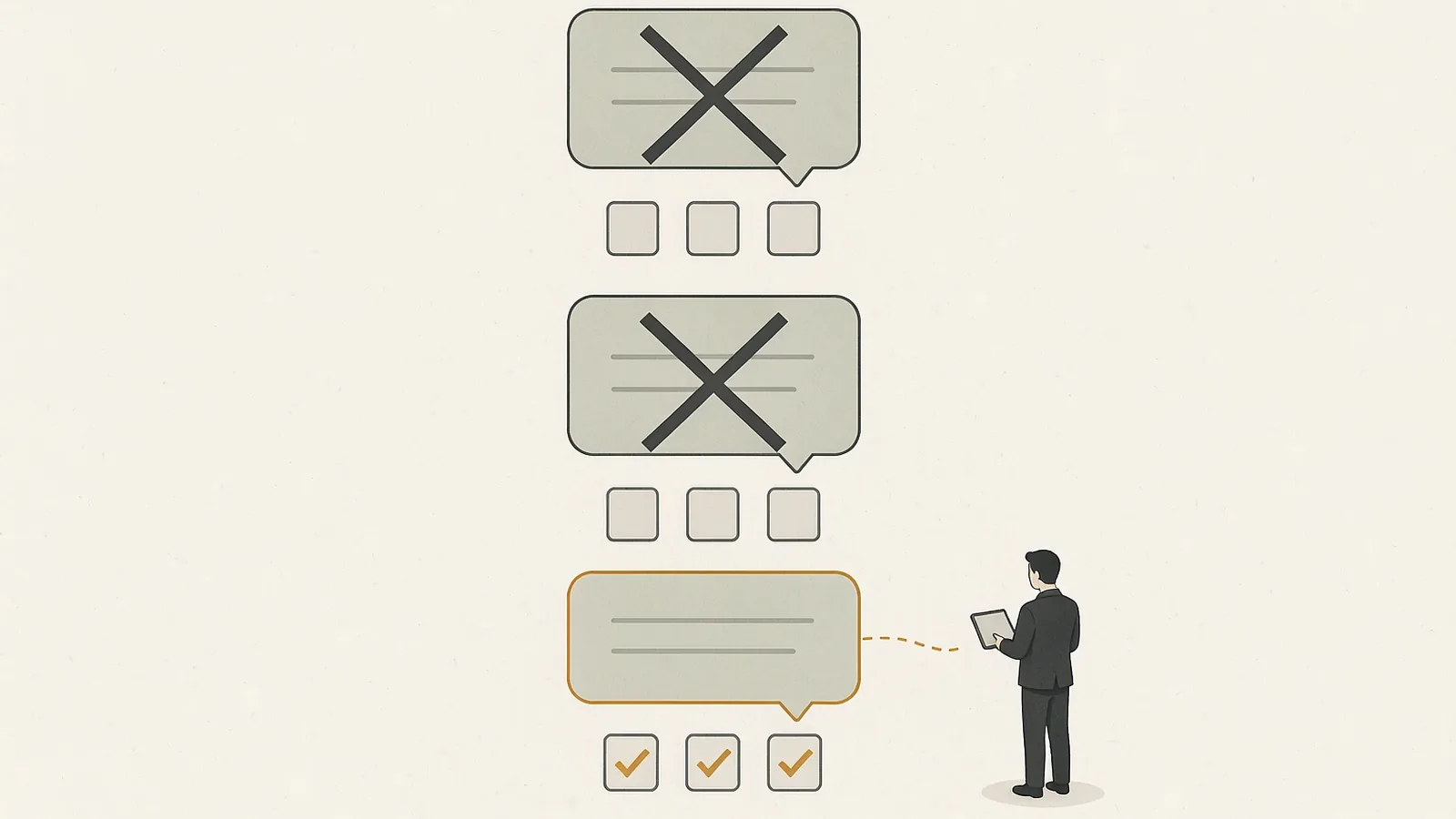
Diagram: Of two “rejected” requests on the same screen, only the one that names a clause, has already done the work, and refuses the shortcut is worth pre-sales time; the dialogue in the image is illustrative, not a real record.
The same reading works on another kind of discussion in short-drama communities — the article on channel shift signals is about separating emotional venting from a real business move.
The Rejection Email Itself Tells You Which Direction to Fix
Once you have the rejection email and the test build, the time-consuming part is not “what do we change” — it is deciding which category the case falls into.
Short-drama apps hit three categories most often, and each one takes a different action.
3.1.1 In-App Purchase. This clause governs “unlocking”. Apple’s App Store Review Guidelines put it plainly: if you want to unlock features or functionality within your app — subscriptions, in-game currencies, game levels, access to premium content, or unlocking a full version — you must use in-app purchase. Short-drama payment models sit right on that line: per-episode unlocks, full-series unlocks, continuous subscriptions, every one of them easy to build into something that “looks like inducement”. The usual problems are an unlock pop-up that pushes too hard, a cancellation entry buried too deep, or virtual goods going through a third-party payment instead of IAP.
4.3 Spam. The official heading for this one is Spam, and its first clause says not to create multiple Bundle IDs of the same app — what the industry calls a “duplicate app” or a “shell build”. A 4.3 rejection is usually not a copy problem but a UI framework, code structure, or submission package that overlaps with another build. This one needs structural work; editing copy will not save it.
5.1 Privacy. Data collection purposes that are not explained, or a third-party SDK collecting beyond its remit, both land here. The difference from the two above is the timeline: you can fix the first two yourself and resubmit, whereas 5.1 often has to wait on the SDK provider.
Getting these three apart is what makes your diagnosis worth something. A consultant who can only say “you got hit by 3.1.1” and one who can point out “your full-series unlock pop-up fires early inside the review build” charge two different prices.
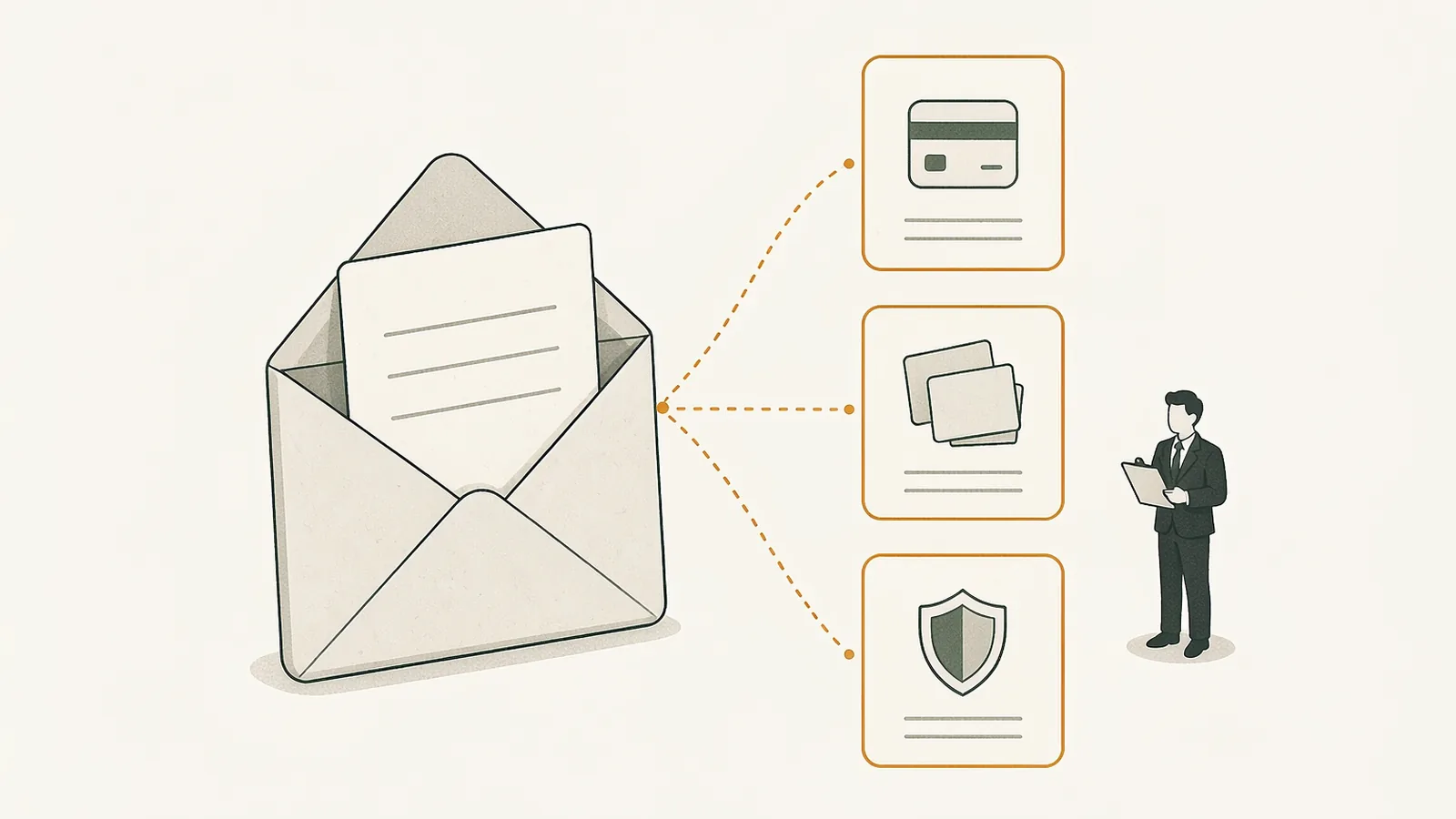
Diagram: The same rejection email can point to three different remediation directions — in-app purchase, duplicate app, privacy — each touching different files on a different timeline; the elements in the image are illustrative, not a real record.
Your First Reply Decides Which Pile They Put You In
What a legitimate platform wants during a takedown crisis is not a lucky break but a diagnosis it can act on. So the first line should not be “we can guarantee approval” — it should be “we know what Apple is reviewing for”.
A usable reply skeleton looks like this:
I understand the anxiety — a takedown right before an S-tier launch is brutal. Apple has been strict on 3.1.1 for short-drama apps lately, usually because the “unlock the full series” pop-up is too aggressive, or the subscription cancellation entry is not obvious enough. On 4.3, it may be that your UI framework or code structure overlaps with a shell build.
If it helps, send me the rejection email screenshot and the app’s test build, and our technical specialist will produce a free diagnosis report within half an hour, with suggested changes. We don’t force grey-market approvals; we do legitimate compliance remediation.
That last sentence is the most valuable part of the whole reply. The moment “we don’t force grey-market approvals” lands, you are lifted out of the wall of ads — and while the other side is anxious, their guard is highest around the words “guaranteed pass”.
If you genuinely have comparable cases that got through, one line here is enough. If you do not, do not invent one: people in this line of work will ask for detail, and two questions will expose it.
Group Messages Are Not Invisible — They Get Pushed Off the Screen
Once someone shouts “rejected” or “taken down”, dozens of “we can get you listed”, “selling accounts”, “guaranteed approval” messages pour in within three minutes. A BD watching dozens of groups cannot realistically catch the one that matters by scrolling.
The workable approach is to configure two separate word sets. One is what you want to see: rejection, takedown, 3.1.1, 4.3, appeal rejected, qualifications, remediation. The other is what you want to block: force it through, enterprise certificate, TF certificate, guaranteed pass, insider contact. The first decides which messages reach your list; the second decides which never do.
Top Prospect works on that logic: it reads the groups you have permission to access, keeps the messages that hit your monitoring words and were not blocked by your exclusion words together with the original text, the sender, and the surrounding context, and lines them up by time as a list you can actually work through. Whether a given message is a real need or another grey-market feeler, it will not decide for you — that step is yours, from the original text.
When a group fills up with ads and the useful information gets washed out, that is signal-to-noise degrading, and this piece on group-chat noise walks through the mechanism in more detail.
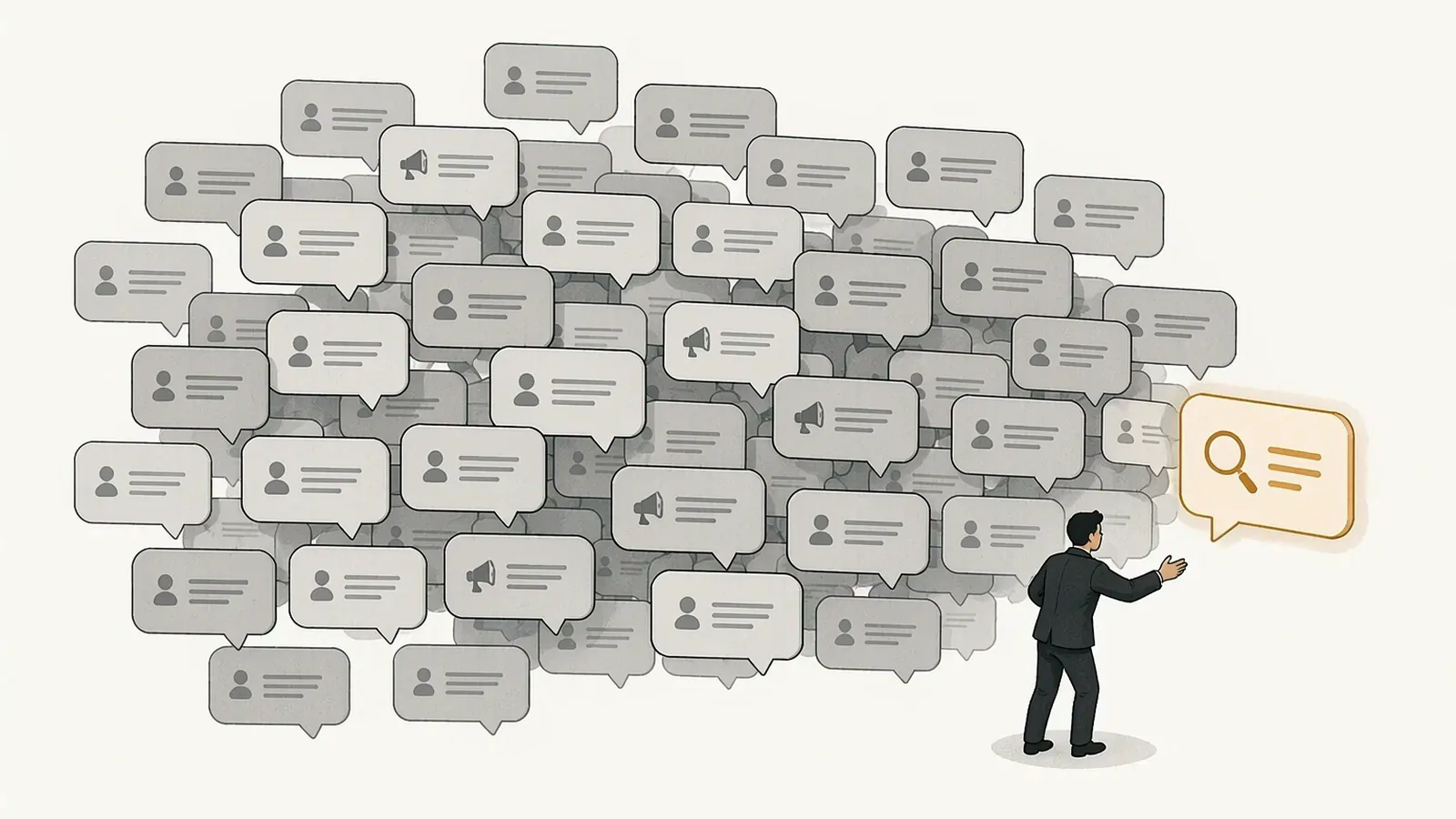
Diagram: Once enough people are shouting “rejected”, ads and bots flood in first, and the one that matters is easily pushed off the screen; the elements in the image are illustrative, not a real record.
The Three Questions That Come Up Most
What are the most common reasons a short-drama app gets rejected by Apple or Google?
Three places mostly. In-app purchase and subscriptions (3.1.1): an unlock pop-up that pushes too hard, a hidden cancellation entry, virtual goods that skip IAP. Duplicate app (4.3): a UI or code structure overlapping with a shell build, sensitive words in the metadata description. Privacy and data (5.1): a data collection purpose that is not explained, a third-party SDK collecting beyond its remit.
When looking for a compliance partner in a group, how do you tell a legitimate team from a grey-market broker?
Two things. First, the diagnostic logic: a legitimate team asks for the rejection email and the test build, then tells you what to change and why; a grey-market broker only says “we have someone inside”. Second, the service boundary: a legitimate team will say what this engagement can fix and what it cannot promise; a broker never discusses the rejection reason, only price and speed.
Can you just take the “force it through” jobs that show up in the group?
Not advisable. What they are buying is a way around the platform rules, not remediation capability, so they rarely turn into long-term clients. And once your name appears in the same breath as “force it through” or “guaranteed pass”, legitimate platforms will drop you during vendor screening. The right move for these is to treat them as noise and exclude them, not as an opportunity.
What Gets Remembered Is Who Answered
The takedown week always passes — either the remediation goes through and the app is back up, or the build is replaced and redone. But the group keeps a different record: who answered that day, and whether they sounded like someone who knows the work.
Next time someone shouts “we got rejected”, the first person they think of is usually the one who, last time, did not join in shouting “guaranteed pass” but asked, “can you send me the rejection email?”
Sources and further reading
This article is human-authored. TOP Prospect processes only Telegram groups the user has explicitly authorized and connected. Its output supports human sales judgement; it does not replace human decisions and does not automatically contact or message group members.
How a Signal worth attention is found
See how Top Prospect finds and organizes Signals worth checking, keeps the original Telegram context, removes duplicates, and helps you decide what to review first. You decide whether to follow up and what to do next.