Don't Wait Until a Competitor Gets There First: Which Glamsterdam Messages Should BD Follow?
How Web3 infrastructure, node-service, and smart-contract audit sales teams can qualify Telegram discussions about Glamsterdam compatibility testing without mistaking them for confirmed buyers.
Signals to watch
- A fixed release, test, or mainnet deadline
- A stated need for a ready-made environment because internal setup is too slow
- A decision path involving a CTO, procurement, or comparison of service providers
The Glamsterdam window is getting closer. For BD and sales teams at Web3 infrastructure, node-service, test-environment, and smart-contract audit providers, that creates a technical deadline across a potential customer base. It does not create a list of confirmed buyers.
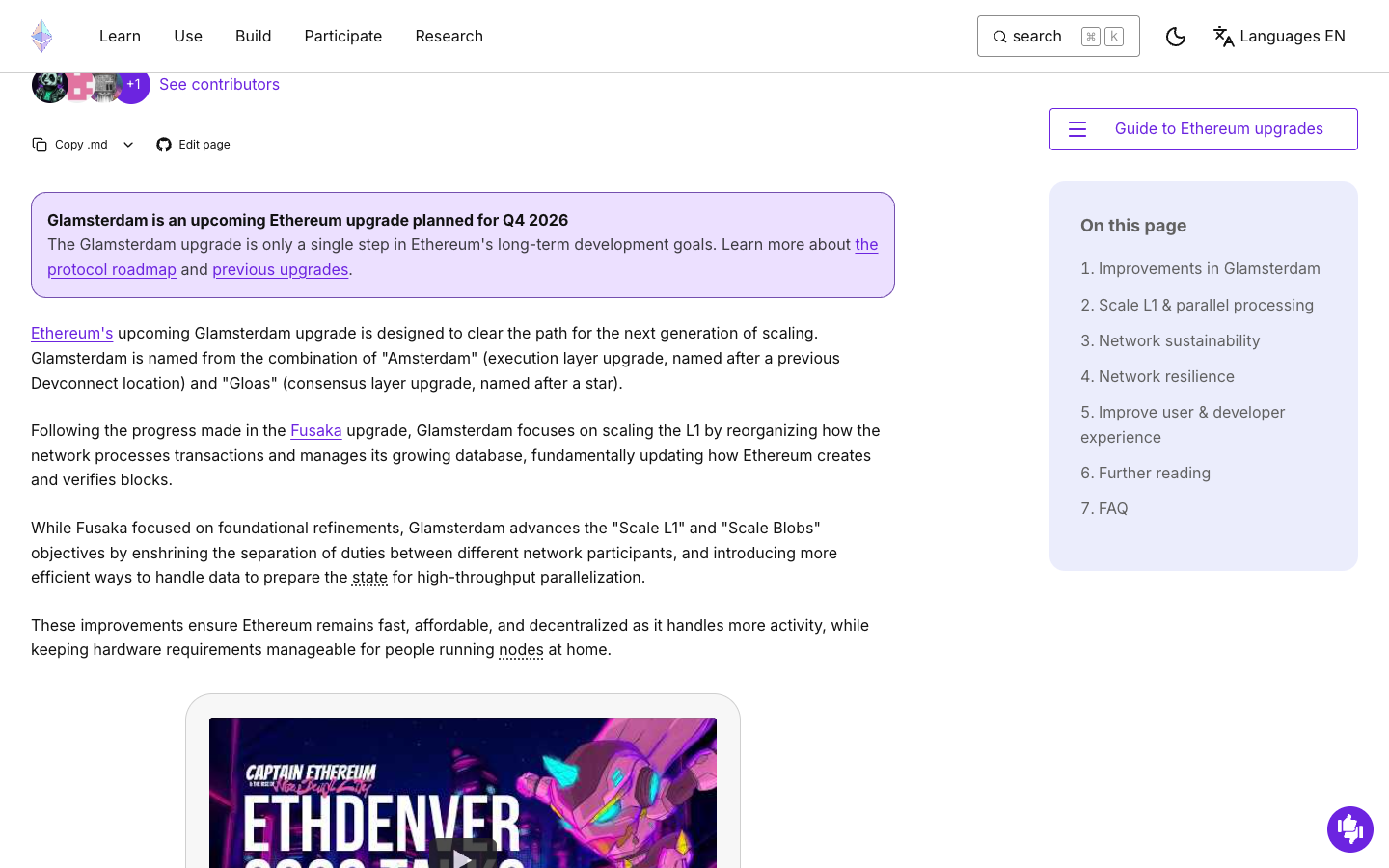
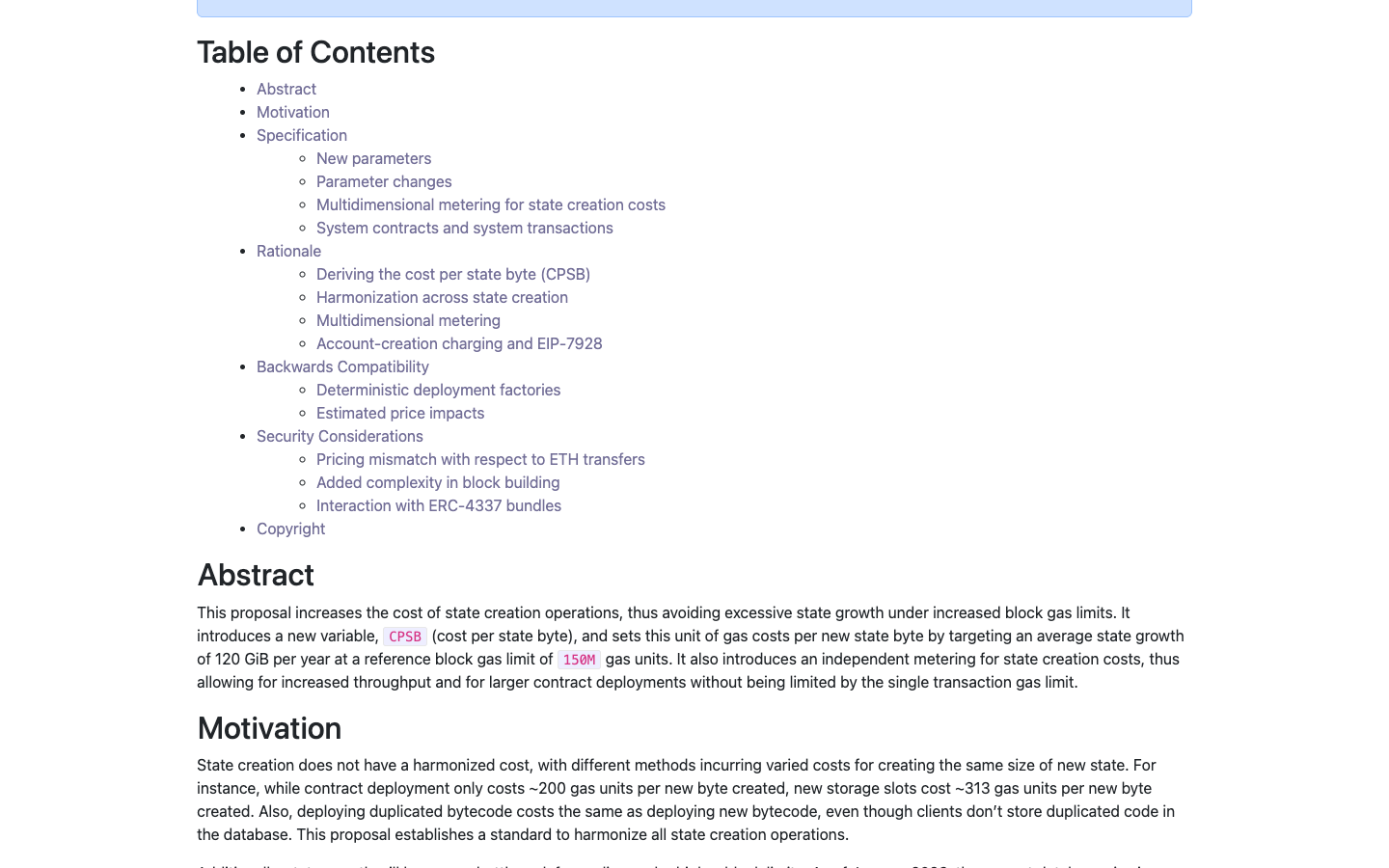
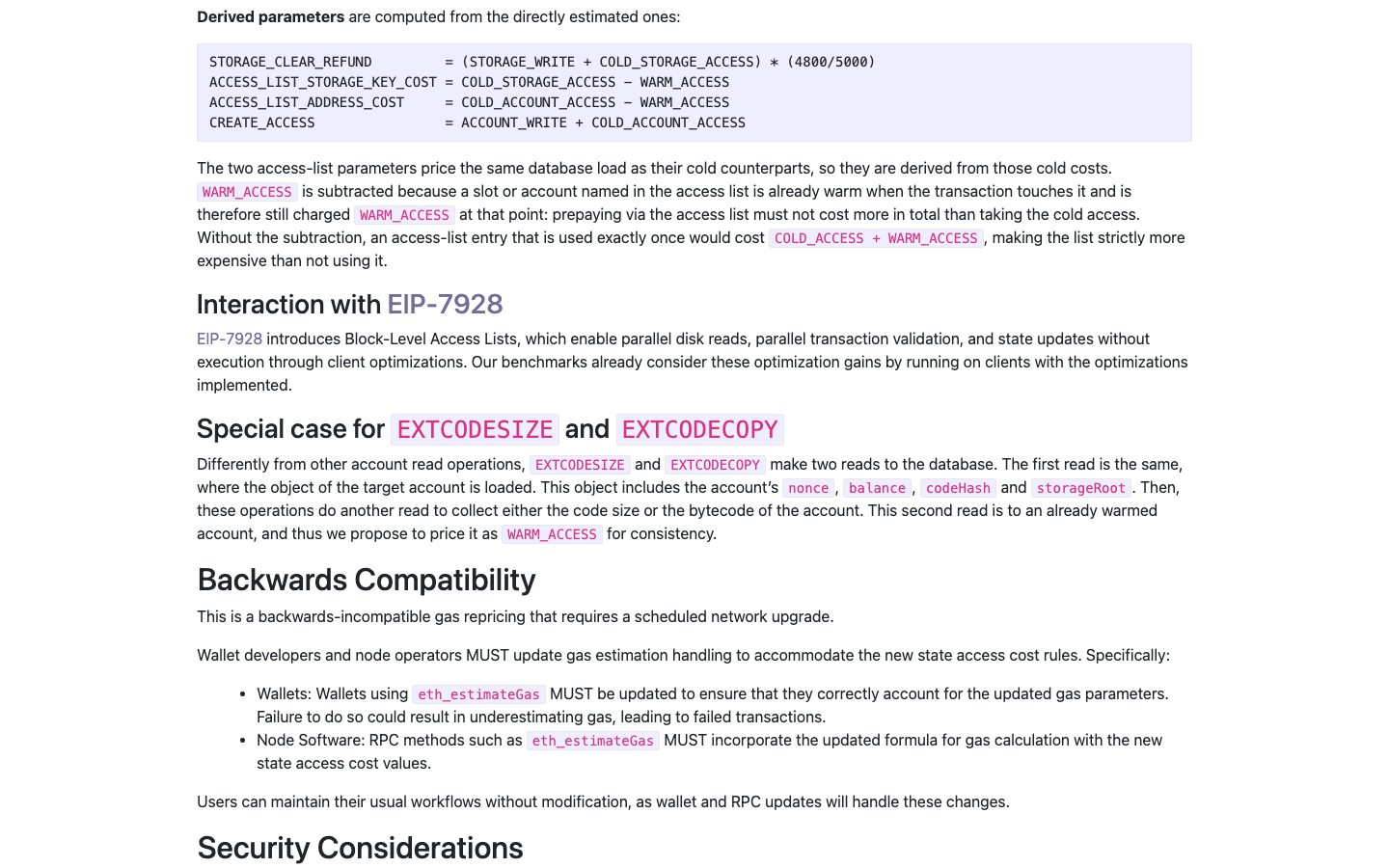
In Telegram developer communities and project groups, conversations about gas repricing and contract compatibility are shifting from general protocol talk toward deadline-shaped requests. Here, “repricing” should be specific: EIP-8037 covers state-creation costs, while EIP-8038 updates costs for state access and writes. A generic compute loop is not automatically affected; the operations inside it matter.
You may see messages like these:
“Will our old contract’s gas limit still be safe after Glamsterdam?” “Has anyone simulated the repricing on a testnet? I don’t want transactions reverting after mainnet.” “Can someone recommend a Glamsterdam compatibility-testing tool or service? We ship next month, and building the environment ourselves is too slow.”
The reflex is understandable: “There is the opportunity. DM now.” The costly mistake is to treat every mention of gas or testing as permission to invest presales time. Open the surrounding chat and the missing facts usually outnumber the known ones.
Key takeaway
- A Signal is a candidate discussion for human review, not a verified buyer or approved project.
- EIP-8037 and EIP-8038 narrow the technical scope to state creation, access, and writes.
- A deadline, a concrete workload, and a decision owner raise review priority; none proves budget or authority.
- The first follow-up should verify constraints and ownership, not send a deck or quote.
A message is only the visible tip of the problem
Consider this representative composite, built from recurring community-discussion patterns and stripped of identifying project details:
User A: How much will Glamsterdam gas repricing affect contracts with frequent calls?
User B: It depends on the logic. A loop with unpredictable state writes could run over its current estimate.
User A: Then we need to test quickly. Is there a ready-made environment or service? Building it ourselves will take too long.
User C: We used XX for nodes. You could ask them.
User A: Thanks, I’ll look.
If a provider immediately replies, “We offer testnet services; would you like an assessment?”, the likely outcome is silence or a polite refusal. The conversation contains interest, but it does not contain a complete commercial situation.
The project size is unknown. The contract might protect a core pool, or it might be an experiment that can be abandoned. “Too slow” could mean the team lacks engineers, or merely that one developer does not want to spend an afternoon on setup. No approved budget appears. User A may be able to choose a supplier, or may be a junior developer collecting notes for someone else.
If the original evidence does not name identity, company, quantity, budget, deadline, decision authority, or procurement state, those fields stay unknown. Filling them in because the message sounds urgent converts a useful observation into a fictional opportunity.
Which Glamsterdam messages deserve follow-up?
Telegram is asynchronous, fragmented, and noisy. That makes a strict definition necessary: a Signal is a candidate discussion worth prioritizing for human verification. It is not a confirmed buyer, an active opportunity, a funded project, or permission to contact someone.
Three dimensions provide a practical first sort.
1. Specificity and urgency
Low-priority messages contain only a broad question: “What is Glamsterdam?” or “Will fees change?” There is no workload, existing system, deadline, or action. This is usually technical curiosity or early exploration. It may be worth reading, but not treating as an account.
Medium-priority messages name a pain point without an action window: “Our contract makes many state writes,” or “We rely on gas estimates from an older RPC stack.” Mark these for observation. A later message may add a release date, a failing simulation, or a request for a particular provider.
Higher-priority candidates connect the problem to a constraint: “We ship next month,” “our internal environment will not be ready,” “we need a repeatable fork simulation,” or “the CTO wants two service options before Friday.” Those details justify human qualification because they describe work that could be scoped. They still do not prove budget, authority, or intent to buy.
2. The author’s history in that source
One message has limited value. A participant who has repeatedly discussed a project release, technical selection, hiring, or an incident in the same group provides more context than a newly joined anonymous account with one post.
History does not authenticate identity. It helps a reviewer see whether the latest question fits an ongoing project narrative or is an isolated piece of content. A consistent sequence—“migration is next month,” followed by “fork simulation failed,” followed by “who can provide an environment?”—is more useful than three keyword matches from unrelated people.
3. A visible decision path
Phrases such as “our CTO is looking for options,” “security wants a report,” or “we need to compare two providers” suggest that evaluation may have started. The word “may” matters. The author could still be forwarding someone else’s request, collecting market information, or seeking a benchmark for internal negotiation.
A decision-path clue raises review priority. It does not mean the provider is shortlisted.
Three questions for human qualification
Once a candidate reaches the top of the review queue, the next step is not a product brochure or price sheet. The purpose of the first exchange is to fill three evidence gaps.
- Is the technical constraint real? Ask for the current gas range and the operation family behind the concern: new account or contract creation, permanent storage creation, state access, an
SSTORE, a value-bearingCALL, or a loop containing those operations. “A complex loop” alone is too vague to map to EIP-8037 or EIP-8038. - What are the resource constraint and deadline? The statement “we ship next month” needs a date. Is the team already testing internally? Does it want an external tool, a managed environment, or an audit to accelerate work? Would a failed test delay the release, or is the release independent?
- Who owns the decision? Determine whether engineering can choose the tool, whether a CTO or security owner must approve the result, and whether finance or procurement is involved. Do not ask for confidential detail the reviewer does not need.
The same discipline applies to other deadline-driven security work. A request such as “launching in two weeks without a pentest” is not automatically executable until authorization, assets, environment, and ownership are bounded, as the pre-launch pentest workflow illustrates.
What TOP Prospect can and cannot do
No BD team can watch dozens of groups around the clock while ads, recruitment posts, memes, and unrelated support questions push technical discussions out of view. TOP Prospect is meant to reduce that review burden, not to manufacture certainty.
The product does not continuously scan the public internet. It does not aggregate unselected groups into new opportunities, certify that an author is a customer, or decide that a project is funded. A user connects an authorized Telegram account and deliberately selects accessible groups, supergroups, or channels.
Inside those selected sources, the system can help with three tasks:
- Preserve context and provenance. A reviewer can retain the original message, source, time, and surrounding discussion for conversations involving Glamsterdam, gas limits, contract tests, or related concepts. This avoids a screenshot or forwarded fragment becoming detached from its source.
- Order candidates without replacing judgment. AI summaries, reasons, and priority scores help decide what to read first. They do not validate the message, identity, authority, budget, or purchase probability.
- Track human disposition. A candidate can be marked for verification, contacted, or rejected so the team does not lose its place in the message stream.
TOP Prospect does not read private chats or unselected sources. It does not automatically authenticate message authors, verify budgets, guarantee real-time discovery, send messages, or add contacts. The human user remains responsible for permission, identity checks, technical judgment, and the relationship.
The trigger is real; the opportunity is not yet real
The state-creation, access, and write-cost changes in EIP-8037 and EIP-8038 provide a natural reason for infrastructure and testing providers to watch for compatibility work. The technical trigger is real. A request for a testing-service recommendation is still only the first observable step.
The commercial difference comes from qualification: can the reviewer identify a workload, a deadline, a resource gap, and a decision path? Can the provider ask precise questions without inventing project facts? Tools can preserve context. They cannot replace the judgment required to turn a group conversation into an appropriate business discussion.
FAQ: Glamsterdam and compatibility-testing signals
When is Glamsterdam expected to activate?
ethereum.org currently says Glamsterdam is planned for Q4 2026. The date can still move with testnet progress and protocol coordination, so reviewers should follow the Ethereum roadmap and core-developer records rather than treating a quarter as a fixed launch day.
Will every smart contract be affected by gas repricing?
The official wording is: “Existing contracts will continue to function normally after Glamsterdam. Developers will likely get several new tools and should review their gas usage.” The page does not quantify a “small portion” of affected contracts.
The operations most relevant here are narrower. EIP-8037 covers new accounts, contract deployment, and permanent state creation. EIP-8038 updates state access, SSTORE, value-bearing CALL, and CREATE/CREATE2 cost components. EIP-8038 also warns that a wallet or RPC with stale gas estimation can underestimate gas and cause a failed transaction.
Is “we ship next month” a strong signal?
It is a useful signal, not proof. Ask for the date, whether it is locked, and whether a failed compatibility test would delay the release. If the author cannot provide a date or consequence, lower the priority.
Can TOP Prospect automatically find every Glamsterdam discussion?
No. It works only in groups, supergroups, or channels deliberately selected by a user who has access. It does not scan the open web, unselected sources, or private chats.
Does a high AI priority score mean the author is a buyer?
No. The score helps order human review. It does not verify that the message is true, that the author can decide, that budget is approved, or that a purchase is likely.
How can BD recognize someone seeking free technical consulting?
Several patterns justify a lower priority:
- asking repeatedly for detailed solutions while withholding all project and scale information;
- refusing to discuss a timeline, decision process, or next step;
- saying explicitly that the inquiry is only informational;
- posting the same question across many groups without entering a concrete evaluation with anyone.
None is conclusive on its own. Together, they are a reason to stop allocating presales time or mark the discussion as outside the target.
Will this testing demand disappear after Glamsterdam?
Based on our judgment, demand will probably taper during the first one to three months after mainnet activation as projects with immediate needs complete testing and adaptation. We expect future Ethereum changes, including work around Verkle Trees and Single Slot Finality, to create recurring compatibility questions. That is our market estimate, not an Ethereum Foundation demand forecast.
About TOP Prospect
TOP Prospect — Find the signal in the noise; you decide its value.
TOP Prospect helps B2B sales and BD teams identify Telegram discussions that may relate to customer needs, supplier replacement, partnerships, or project deadlines. It preserves original messages and context, uses AI to help order human review, and centralizes follow-up status. It works only in groups, supergroups, or channels deliberately selected by a user who has access. It does not read private chats or unselected sources, authenticate authors or budgets, guarantee real-time discovery, send messages, or add contacts. It filters candidate discussions for human verification; commercial judgment and relationship building remain the user’s responsibility.
Frequently asked questions
When is Glamsterdam expected to activate?
ethereum.org currently says Glamsterdam is planned for Q4 2026, but the date can still move with testnet and protocol-coordination progress.
Will every smart contract be affected by gas repricing?
The official page says existing contracts will continue to function normally, while developers should review gas usage. EIP-8037 and EIP-8038 focus on state creation, access, and writes; stale gas estimation can underestimate gas and cause failed transactions.
Is next month's release a strong signal?
It is a useful time anchor, but BD still needs the date, whether it is locked, and whether a failed test would actually delay the release.
Can TOP Prospect find every Glamsterdam discussion automatically?
No. It works only with groups, supergroups, or channels deliberately selected by a user who has access, and it does not read private chats or unselected sources.
Does a high AI priority score mean the author is a real buyer?
No. The score helps order human review; it does not verify identity, authority, budget, procurement status, or purchase probability.
How can BD spot someone seeking free consulting?
Repeated requests for detailed solutions without project scope, timeline, or a concrete next step justify lowering the priority.
Will compatibility-testing demand disappear after Glamsterdam?
Our judgment is that demand will probably taper during the first one to three months after activation. Future protocol upgrades may create recurring demand, but this is a market estimate, not an Ethereum Foundation forecast.
Sources and further reading
This article is human-authored. TOP Prospect processes only Telegram groups the user has explicitly authorized and connected. Its output supports human sales judgement; it does not replace human decisions and does not automatically contact or message group members.
How a Signal worth attention is found
See how Top Prospect finds and organizes Signals worth checking, keeps the original Telegram context, removes duplicates, and helps you decide what to review first. You decide whether to follow up and what to do next.